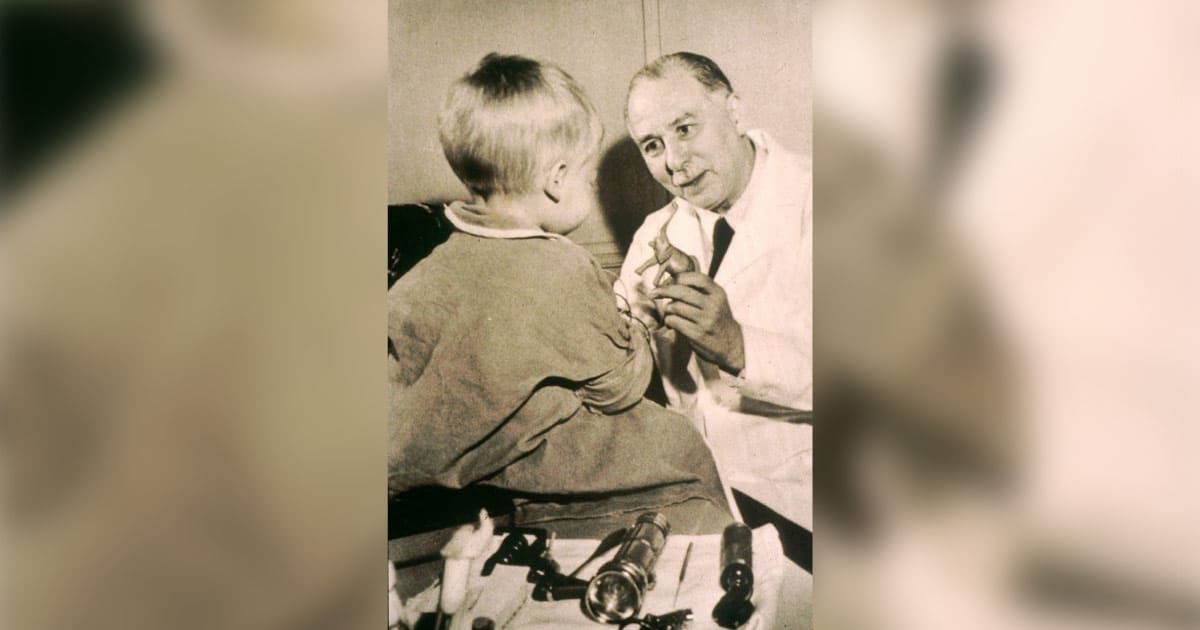
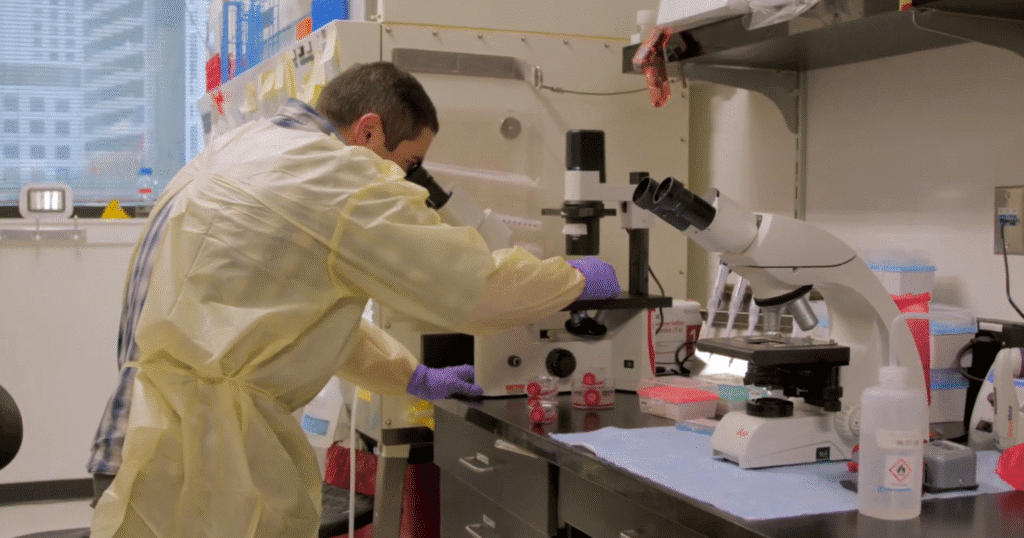
Top: St. Baldrick’s researcher Akiko Shimamura (left) in her lab with a colleague at Fred Hutchinson Cancer Research Center in Seattle. During her St. Baldrick’s-supported study, Dr. Shimamura studied a rare group of inherited bone marrow disorders that are associated with heightened risk of cancer.
Childhood cancer research is at the heart of everything we do at St. Baldrick’s Foundation. If you’re a donor or fundraiser, you want to know your support is making a real difference for kids with cancer and their families. Here’s an inside look at how your donations fund promising research projects, accelerate innovation, and bring hope to childhood cancer families across the country.
Who:
At the center of our mission are the children with cancer who depend on effective treatments and improved outcomes. Every dollar you donate is invested in research most likely to save lives and enhance the health and quality of life for survivors. This commitment is made possible by thousands of donors, volunteers, and childhood cancer families who stand together in this fight.
Expert Teams Guiding Funding Decisions
Funding decisions are made with critical expertise to ensure your donations support the most impactful science:
- Scientific Advisors: A distinguished group of internationally respected pediatric oncology researchers who help shape our funding priorities and provide input as needed.
- Peer Reviewers: Over 200 dedicated pediatric cancer researchers volunteer their time to thoroughly review and score every grant application, ensuring fairness and scientific rigor.
- Board of Directors: Researchers on the Mission Committee provide year-round guidance and use peer review feedback to recommend funding, with the board casting the final vote to approve grants.

What Research Does Your Donation Support?
Your gifts add up to millions of dollars in grants for childhood cancer research. Our funding focuses on:
- Discovering new cures and effective treatment options for pediatric cancers.
- Translating laboratory discoveries into therapies that directly benefit kids with cancer.
- Supporting clinical trials that offer cutting-edge treatment to children and young adults diagnosed with cancer.
- Improving survivors’ quality of life through supportive care research.
- Addressing the unique needs of adolescents and young adults affected by childhood cancer.
When Are Grants Awarded?:
While special grants are made throughout the year, these are the standard grant cycles that fund a wide range of projects:
- January: St. Baldrick’s Fellows conduct research under a mentor, completing their training.
- April: St. Baldrick’s Summer Fellows are medical school or college students working in a pediatric oncology lab for a summer.
- June: Research Grants, St. Baldrick’s Scholars and International Scholars, and the cooperative research with the Children’s Oncology Group.
- October: Infrastructure grants help hospitals expand access to clinical trials, bringing innovative therapies closer to childhood cancer families.
Where Does the Research Take Place?
Great ideas come from across the country and beyond. Your donations fund top-tier research institutions nationwide and in some cases internationally. Infrastructure grants prioritize hospitals where the need is greatest and where St. Baldrick’s volunteers are actively involved, ensuring critical services reach more children with cancer.
How Are Funding Decisions Made?
Our highly respected scientific review process is designed to accelerate the development of new therapies for kids fighting cancer. It has earned the prestigious National Cancer Institute Peer Review Funder designation.
- Each grant type has a dedicated review committee.
- Every application is assigned three expert reviewers who score and provide feedback to help applicants improve, whether or not they receive funding.
- Applications with three exceptional scores are recommended for funding; those with three poor scores are declined.
- Committees discuss applications with intermediate scores, assign final scores, and rank proposals.
- The Mission Committee recommends a funding cutoff (“pay-line”) based on available resources, and the board makes the final funding decisions.
Why Your Support Matters
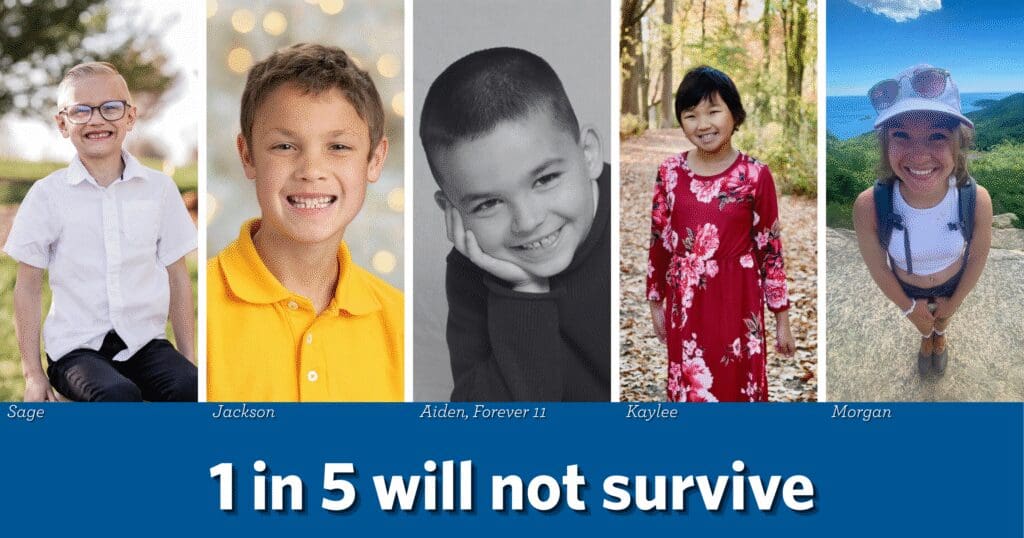
Childhood cancer remains a critical health challenge, with many kids facing aggressive disease and limited treatment options. Every donation helps accelerate research that can transform outcomes and save lives. Your commitment fuels innovation, supports families facing the financial burden of cancer, and brings hope to children and communities affected by this disease.
Join the Fight
You can be part of this vital mission. Join a community dedicated to conquering kids’ cancer by fundraising, volunteering, or spreading awareness. Together, we can change the future for children diagnosed with cancer and their families.
Stories of hope and courage from kids fighting cancer inspire us every day. Your support turns these stories into life-saving science.
Donate