In 2024, our son Sal began a brand-new immunotherapy trial for kids with B-cell acute lymphoblastic leukemia (B-ALL). The treatment, called Blinatumomab—or Blina for short—had shown incredible promise in adults but was still being studied in young children. Sal was one of the first kids to receive this 28-day continuous infusion trial, a therapy that helps the immune system hunt down and destroy leukemia cells.
This is a breakthrough we’re endlessly grateful for. Today, Sal is laughing, playing, and going to school. But like every leap forward in cancer research, it comes with a very real, very human side. The day-to-day wasn’t easy. It was messy, frustrating, sometimes hilarious, and deeply exhausting. This is what those 28 days were like.
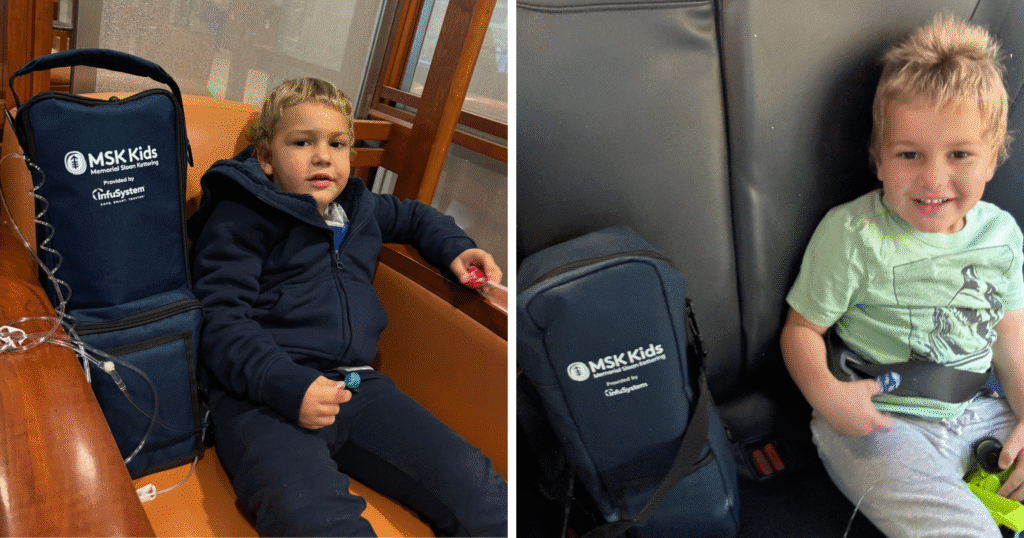
Sal with his Blina backpack
Day 1: We arrived at Memorial Sloan Kettering, met with the team, and Sal got hooked up to his new constant companion: a backpack-sized pump delivering Blina and saline, weighing about 10 pounds. Not ideal for a 3-year-old. We opted for a 3-day bag to avoid a 20-pound version, but even that was a load.
That first night brought a mild fever scare and a colorful incident involving a dinner of Starbursts and a hasty cleanup. Welcome to the trial.
Days 2-3: No major issues, but it quickly became clear that Blina’s pump was fussy. Any kink or loose connection would set off a beeping alarm, and those became the soundtrack of our lives. I MacGyvered a line fix the staff hadn’t spotted, and we learned fast that with a trial this new, everyone’s figuring it out as they go.
Days 4-7: Back home, Sal adjusted to his new tether. He dragged the backpack like Linus with his blanket, indifferent but resigned. At school, we set up new protocols with teachers, and a classroom aide joined his class to help manage the pump. The team was ready. Still, the unexpected lurked.
One night, Sal’s needle dislodged. We raced to the hospital for a middle-of-the-night re-access and a new bag. This became routine.
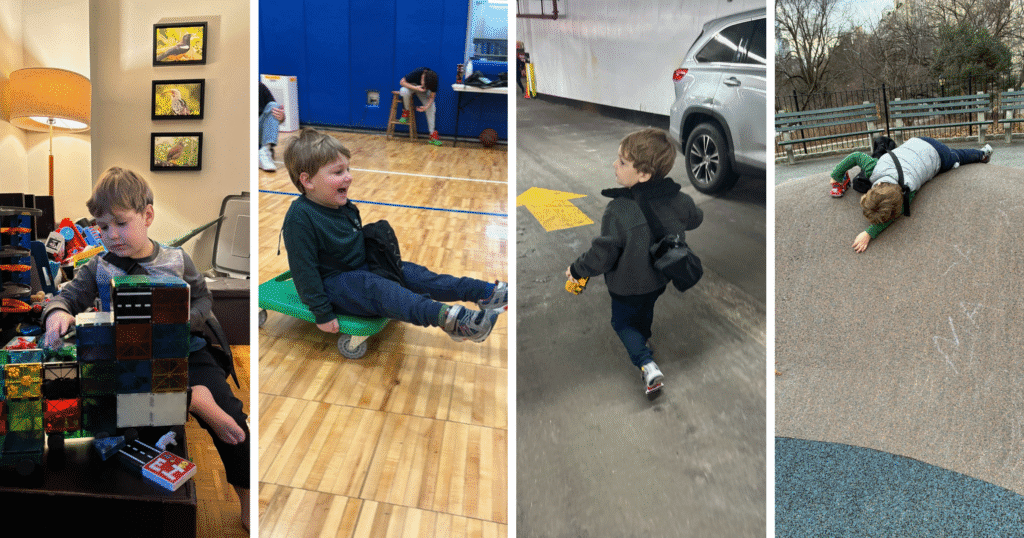
Sal is getting back into his routine.
Days 8-14: The challenges continued: a bag ran dry early (thanks, pharmacy), lines kinked, and pumps beeped endlessly. Blina made Sal pee like crazy, so we were up multiple times a night. And still, Sal powered through, cracking jokes and playing in the hospital playroom.
Day 21: Miraculously, we made it through the NYC Marathon weekend without a hospital visit. A small victory.
Days 22-26: The home stretch brought new pump failures, tangled lines, and an epic Saturday morning incident involving a broken saline pump battery cover and a frantic battery scavenger hunt. Somehow, we kept it together.
Day 28: On the final full day, we had a scare. Sal’s shirt was soaked in blood from a torn line. We raced in for one last emergency re-access. Thankfully, no infection.
At 2 pm the next day, Sal’s line was disconnected. The 28 days were done.
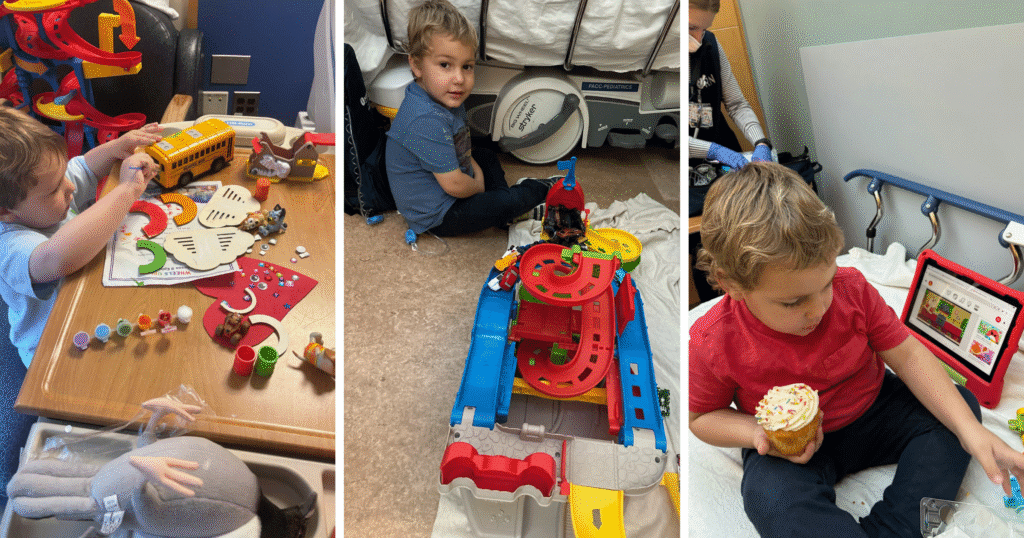
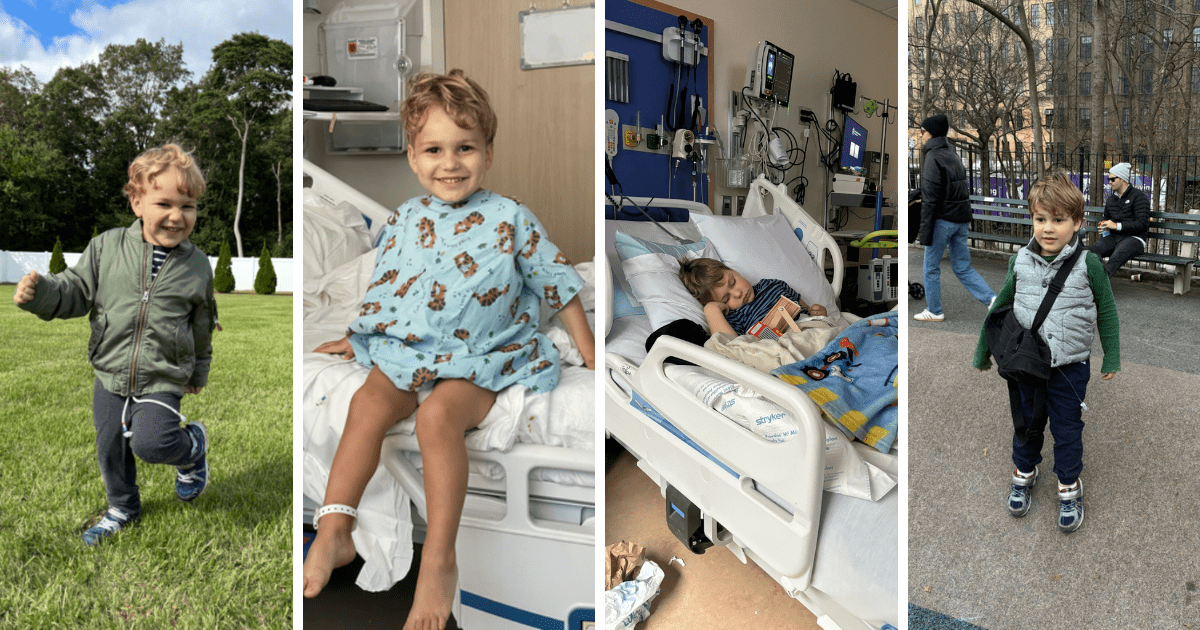
Sal in various stages of treatment.
We’ll do this again for a second cycle. But now, we know what to expect, how to beat the beeping, and which nurses know the tricks.
This trial didn’t just save Sal’s life — it gave us a glimpse of what’s possible when research moves forward. It can be clunky, exhausting, and imperfect. And that’s why continued research matters. So, kids like Sal get treatments that are not only lifesaving but also gentler, simpler, and easier to endure.
Here’s to breakthroughs, and to the families navigating them one beep at a time.
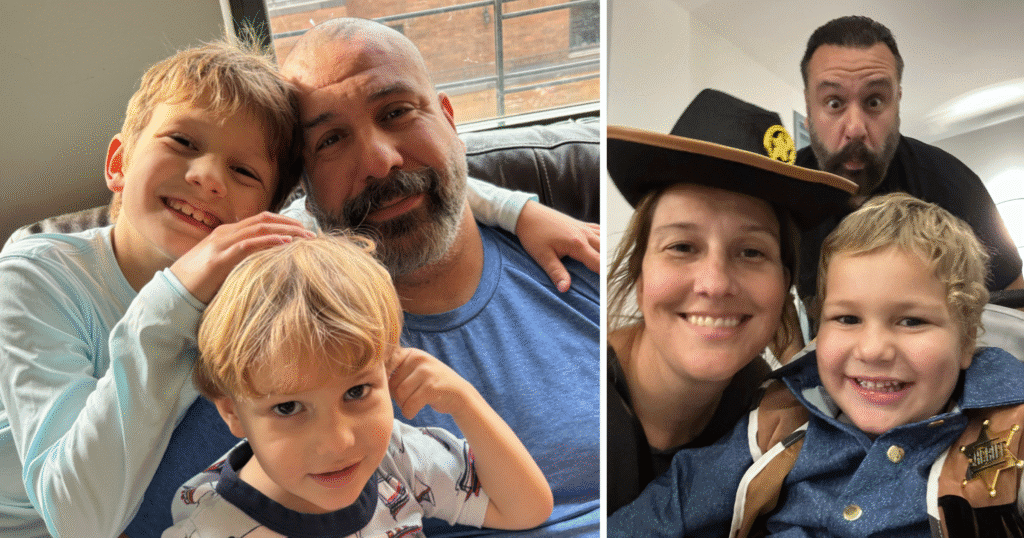
Left: Sal with his dad and brother. Right: Sal with his mom and dad.
A Note from St. Baldrick’s: At the end of 2024, Blinatumomab (Blina) became a groundbreaking addition to frontline treatment for children with standard-risk B-cell ALL. Adding this targeted immunotherapy to traditional chemotherapy increases disease-free survival rates from less than 88% to 96%. Because ALL is the most common childhood cancer, this progress represents many, many lives saved.
Through this clinical trial, researchers and families have also discovered new ways to help kids and caregivers feel more independent during treatment — from smaller, lighter backpacks to protocols that better support life outside the hospital. It’s one more step toward making lifesaving care not just possible, but more livable.
Introducing: Send Kids’ Cancer Packing™

Oh, the adventures the backpack will have!
The blina backpack treatment has inspired a new St. Baldrick’s initiative: Send Kids’ Cancer Packing™. For 28 days—or 28 miles—we’re challenging you to carry a backpack in solidarity with kids fighting cancer and raise funds for the next lifesaving discovery.
Together, we can give kids like Sal a lighter load and a brighter future.