Childhood cancer research is a long-term commitment.
Breakthroughs are rarely immediate. Discoveries take time to mature. And many of today’s most effective treatments exist because someone chose to support research years—sometimes decades—earlier.
The question now is: what kind of future are we planting for the kids who come next?
Funding Every Stage of Research Matters
From basic discovery to clinical trials, St. Baldrick’s supports the full childhood cancer research journey we’ve outlined throughout this series.
(If you missed them, you can explore how childhood cancer research works and the types of research that move discoveries forward.)
That journey includes:
- Early discovery and basic science
- Translational research that moves ideas toward patients
- Clinical trials that test safer, more effective treatments
- Training and mentoring the next generation of researchers
- Population-based studies that protect survivors’ long-term health
- Research that crosses borders
When any part of this system is underfunded, progress slows. By investing across all stages and in all areas of childhood cancer research, St. Baldrick’s helps keep research moving forward—steadily, sustainably, and with kids at the center.
Why Early Support Is Critical
Some funding sources focus only on late-stage research, when success feels more imminent.
But the ideas that eventually change treatment begin as questions—unproven, unpolished, and full of possibility. Early funding gives researchers the chance to explore those ideas, generate data, and build the evidence needed to move forward.
“This is something St. Baldrick’s donors and volunteers can be proud of. I was a St. Baldrick’s Fellow from 2014-2016, which gave me the start I needed to launch my research career and open my own lab to study a deadly childhood brain cancer called diffuse midline glioma (DMG). Thanks to that early support, we were able to study how a drug called ONC201 works against DMG and track patient samples to predict response to treatment. That research helped lead to the FDA’s recent approval of ONC201 — the first-ever approved drug for this devastating pediatric brain tumor.” – Carl Koschmann, M.D.
 “This is something St. Baldrick’s donors and volunteers can be proud of. I was a St. Baldrick’s Fellow from 2014-2016, which gave me the start I needed to launch my research career and open my own lab to study a deadly childhood brain cancer called diffuse midline glioma (DMG). Thanks to that early support, we were able to study how a drug called ONC201 works against DMG and track patient samples to predict response to treatment. That research helped lead to the FDA’s recent approval of ONC201 — the first-ever approved drug for this devastating pediatric brain tumor.” – Carl Koschmann, M.D.
Translational Research: From Bench to Bedside
Translational research is the work that takes promising ideas from the lab and pushes them toward patients—carefully, thoughtfully, and with constant feedback along the way.
Sometimes described as the space between “what could be” and “what helps,” this research helps determine:
- Which lab discoveries are strong enough to move forward
- How a potential treatment should be tested in people
- What adjustments are needed before a therapy is ready for broader study
Just as importantly, translational research doesn’t move in only one direction. What doctors learn while treating patients feeds back into the lab, refining questions, improving approaches, and guiding what comes next.
This back-and-forth is how science avoids dead ends—and how ideas with real potential make it to the next stage of testing.
Clinical Trials: Where Hope Meets Care
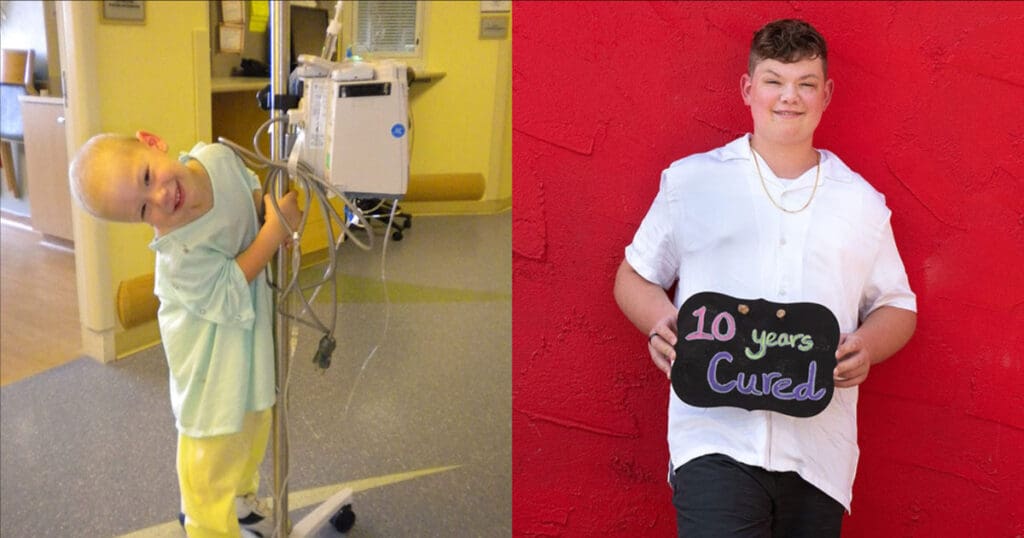
For kids with cancer and their families, clinical trials mean hope—in two important ways.
First, early-phase clinical trials give patients with no remaining standard treatment options the opportunity to participate in carefully monitored studies designed to establish safety and dosage—while, in rare cases, providing benefit when no other options exist.
Second, larger clinical trials help determine whether a new treatment offers a better outcome than the current standard of care. That “better” can mean more children cured, fewer side effects, or a healthier future for survivors.
Before deciding on a treatment plan, families are often given the option to participate in a clinical trial —one designed not just to treat today’s child, but to improve care for the next.
While fewer than 5% of adults with cancer are treated on clinical trials, for childhood cancers, clinical trials are not the exception. They are the standard of care.
How St. Baldrick’s Supports Clinical Trials—At Every Level
With donor support, St. Baldrick’s helps ensure that discoveries don’t stall at the lab bench, but move forward to help patients.
Since 2005, more than 156,000 infants, children, teens, and young adults have participated in a clinical trial supported by St. Baldrick’s donors.
Early-Phase Trials: Opening Doors Where None Exist
Early-phase trials are often supported through St. Baldrick’s grants to individual researchers or collaborative research groups. One example, led by the EPICC Team (Empowering Pediatric Immunotherapies for Childhood Cancer), tested a CAR T-cell immunotherapy for diffuse midline glioma (DMG)—one of the most aggressive childhood brain tumors, where survival is often measured in months.
In this early-phase trial, some children experienced extended survival and meaningful quality of life. One child lived more than three years, able to attend school and make memories with family—time that would not have been possible without access to a trial like this.
While not yet a cure, the trial generated critical insight that researchers are now using to refine treatments and move closer to lasting solutions.
A Decade Of EPICC Progress In Kids’ Cancer Research >>
Phase 3 Trials: Changing the Standard of Care
Large, late-phase trials are supported primarily through the Children’s Oncology Group (COG)—a cooperative research network of more than 220 institutions across North America, Australia, New Zealand, and Europe.
Through this network:
- More than 100 trials are open at any given time
- Thousands of children have access to cutting-edge treatments
- New therapies can become the new standard of care
An annual grant from St. Baldrick’s helps provide per-patient support to COG institutions, helping cover the real costs of running clinical trials.
The average cost to treat a child on a clinical trial is about $10,000. The U.S. National Cancer Institute reimburses a portion, and St. Baldrick’s donors help close the gap—making trials more accessible and more widely available.
Check out The Power of Partnership: How Funding the Children’s Oncology Group is Saving Lives >>
Because of this support, more children can participate in trials closer to home, instead of uprooting their lives to travel across the country.
Training the Next Generation
Early in St. Baldrick’s history, leaders in pediatric oncology noticed a warning sign: without support, the field risked losing its next generation of researchers. Childhood cancer research is highly specialized, and early-career scientists face a critical crossroads—stay in the field or leave.
That moment can shape the future of every child diagnosed with cancer.
While early-career research can feel risky, St. Baldrick’s recognizes that not investing is the greater risk.
St. Baldrick’s Summer Fellow, Fellow, and Scholar grants give young researchers the chance to take the first steps—launching careers, generating data, and building programs that can last decades.
By funding early-career scientists, we keep talent in the field, protect the future workforce, and ensure the progress of childhood cancer research continues.
 “St Baldrick’s funding support helped to jump start my academic career and currently continue to do both basic science and clinical research in Ewing sarcoma and other bone and soft tissue sarcomas which was the subject of my first St Baldrick’s grant. I will forever be grateful for support from St Baldrick’s.” – Filemon De la Cruz, M.D
Population-Based Research: Seeing What Individual Stories Can’t
Population-based research looks across large groups of children, survivors, and families to uncover patterns that only appear over time. By studying many people, researchers can answer questions no single study or trial could.
This work helps reveal:
- How treatments affect long-term health into adulthood
- Genetic or environmental factors that increase cancer risk
- Gaps in diagnosis, access to care, or outcomes across communities
These insights guide follow-up care, screening, and treatment, ensuring progress benefits all children. By seeing the bigger picture, population-based research makes childhood cancer care more effective, equitable, and focused on helping kids thrive long after treatment.
Research Without Borders
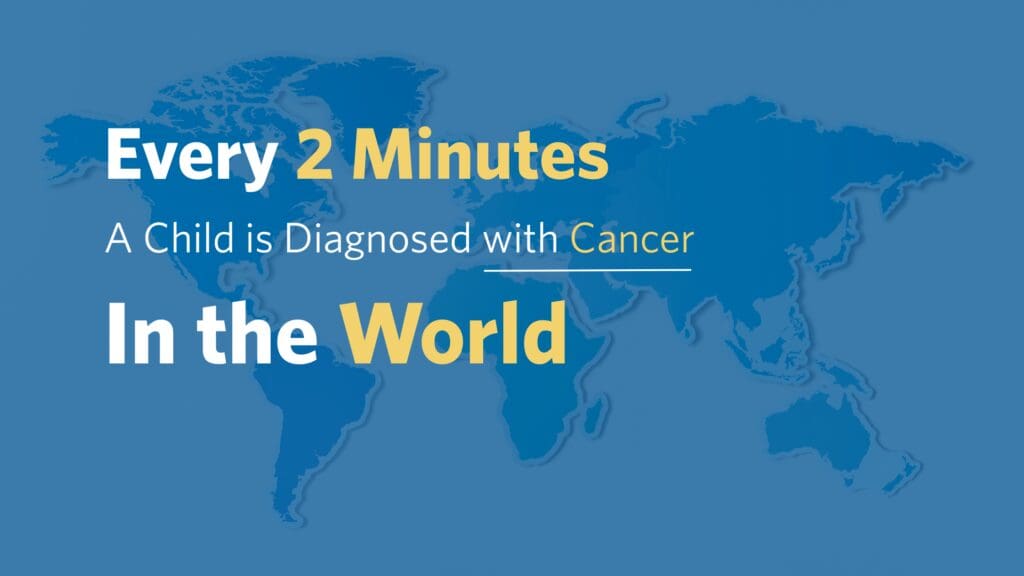
Cancer doesn’t stop at state—or national—lines. Neither should research.
St. Baldrick’s funds childhood cancer research around the world, supporting:
- Training researchers from low- and middle-income countries through St. Baldrick’s International Scholar Awards
- International clinical trial participation
- Global research collaborations
Whether a child is treated in their hometown—or across the country or globe—progress depends on a connected research community.
Update: More Hope for Children with Cancer in Africa >>
What Makes St. Baldrick’s Different
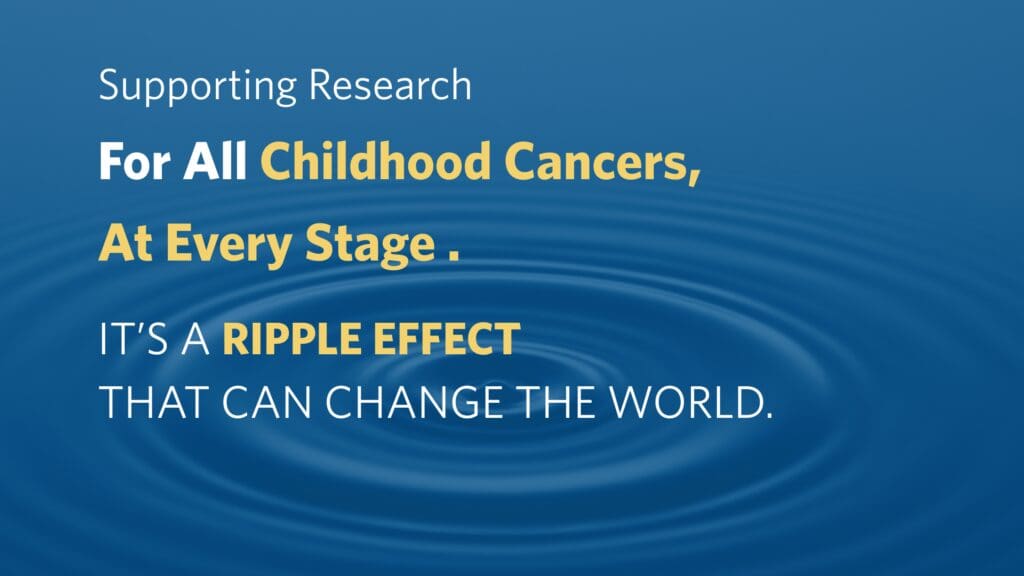
Yes, supporting your local hospital matters—but the true impact happens when we support bigger. When we support the best research, no matter where it is happening.
That’s where St. Baldrick’s comes in, adding scale, connection, and continuity so today’s care is strengthened by discovery, collaboration, and progress over time.
Through St. Baldrick’s, your support doesn’t just stay in one place. It creates a ripple effect that strengthens the entire childhood cancer research ecosystem—reaching every hospital qualified to treat kids with cancer, helping fund clinical trials near and far, and supporting research that benefits children now and in the future.
By choosing to fund progress for all childhood cancers, at every stage of research, St. Baldrick’s plays a unique role in keeping progress moving. Early discovery fuels new ideas. Translational research moves them toward patients. Clinical trials turn discoveries into better treatments and new standards of care.
This comprehensive, connected approach is why St. Baldrick’s funding has contributed to every major breakthrough in childhood cancer research over the past 25 years.
Research takes time.
Children with cancer deserve that work to continue—uninterrupted.
Every grant awarded today builds on what came before and makes room for what’s next. Because the cures of tomorrow depend on the support we choose to give today.
Learn more about St. Baldrick’s research priorities. Discover the areas your support helps fund and how it drives progress for children with cancer everywhere.
In case you missed the first two posts in this series: