Allied World Assurance Company Holdings, Ltd. (Allied World) today announced a $4.3 million, five-year commitment to the St. Baldrick’s Foundation, accelerating lifesaving childhood cancer research and addressing two of the most urgent needs in the field. This transformative investment will reopen critical research funding focused on quality of life for children with cancer and support the next generation of pediatric cancer researchers — ensuring that today’s care evolves into tomorrow’s breakthroughs.
Through the newly named Allied World – St. Baldrick’s Survivorship and Supportive Care Research Grant Program, this commitment will restore a research category paused since 2020 due to the pandemic’s impact on revenue. These grants will fund studies aimed at improving the quality of life for children during treatment and for survivors facing long-term effects of therapy, helping kids not just survive cancer, but thrive.
The commitment also fully supports the Allied World – St. Baldrick’s Fellowship Program, including the newly announced 2026 Fellows. This year’s class provides $1.3 million to enable eight early-career pediatric oncologists to pursue groundbreaking research. Fellowship grants provide two to three years of funding and mentorship, giving doctors the protected time they need to become physician-scientists, transforming today’s caregivers into tomorrow’s innovators.
At a time when uncertainty around federal funding has discouraged many young scientists from entering the field, investments like this are critical to ensuring the pipeline of childhood cancer researchers continues to grow, fueling the discoveries and breakthroughs that will improve outcomes for kids for years to come.
Meet the 2026 Allied World – St. Baldrick’s Fellows, the exceptional early-career scientists leading this next wave of innovation in pediatric cancer research.
The 2026 Allied World – St. Baldrick’s Fellows are:
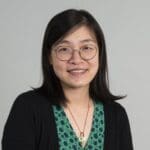 Amy Li, MD, PhD, Dana-Farber/Boston Children’s Cancer and Blood Disorders Center
Relapsed or treatment-resistant pediatric acute myeloid leukemia (AML) is very difficult to cure. Dr. Li is studying whether combining two types of drugs, thalidomide analogs and menin inhibitors, could help the immune system better recognize and attack leukemia cells in certain genetic forms of AML. Her research will examine how this drug combination affects immune cells and aims to make new treatments more effective and safer for children.
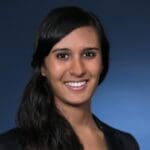 Rahela Aziz-Bose, MD, MPH, Dana-Farber/Boston Children’s Cancer and Blood Disorders Center (Extended Fellow)
Many childhood cancer survivors face long-term health problems, including heart disease, and about 1 in 4 also struggle with not having consistent access to healthy food. Dr. Aziz-Bose is testing a program called CHEF, which provides meal kits, grocery gift cards, and support applying for nutrition assistance programs to help families access healthier food. The study will evaluate whether this program improves eating habits and food security in young survivors during their first year after treatment, with the goal of reducing future heart disease risk.
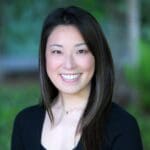 Laura Kagami, MD, Children’s Hospital Los Angeles
Dr. Kagami is developing a new blood-based test called LBSeq4Kids to help detect and monitor cancer in children without needing invasive surgical biopsies. This “liquid biopsy” looks for tumor DNA in body fluids like blood or spinal fluid, allowing doctors to track how a child’s cancer responds to treatment in real time. The goal is to better personalize care, choose more effective treatments, and improve outcomes for children with cancer.
Alberto Guerra, MD, PhD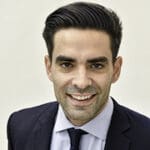 , Children’s Hospital of Philadelphia
Many childhood cancer treatments can harm healthy cells because they cannot always distinguish between cancer and normal cells, leading to serious long-term side effects. Dr. Guerra is developing a type of immunotherapy that uses a patient’s own white blood cells, engineered to recognize and attack a marker found on cancer cells but not on healthy cells. This approach could help the immune system target cancer more precisely and stay active longer, potentially improving survival while reducing harmful side effects.
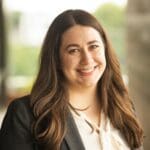 Monica Pomaville, MD, Children’s Hospital of Philadelphia
Diffuse midline glioma is an aggressive childhood brain tumor with no known cure. Dr. Pomaville is researching ways to make immunotherapy, such as CAR T therapy, more effective by modifying RNA signals that influence how tumors appear to the immune system. Her work will test whether a drug that alters these signals can help the immune system better recognize and attack the cancer, potentially improving treatment outcomes.
Timothy Spear, MD, PhD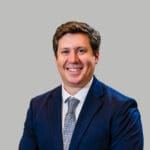 , Children’s Hospital of Philadelphia (Extended Fellow)
High-risk neuroblastoma is an aggressive childhood cancer, and current treatments can leave survivors with serious lifelong side effects. Researchers are developing personalized cancer vaccines that train a patient’s immune system to recognize and attack mutations unique to their tumor, called neoantigens. This study will test a new tool to identify these mutations and evaluate how well the personalized vaccine works, with the goal of eventually launching clinical trials for children with high-risk neuroblastoma and other pediatric cancers.
Helen Tian, MD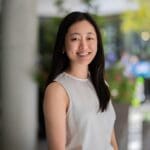 , University of California, San Francisco
Acute myeloid leukemia (AML) is an aggressive childhood blood cancer, and current treatments have changed little in the past 20 years. Dr. Tian is studying a particularly high-risk form of AML caused by a NUP98 gene rearrangement to better understand the proteins that help these leukemia cells grow. Her team is also working to develop a drug that blocks one of these key proteins, which could lead to new, more effective treatments for children with this hard-to-treat leukemia.
Lauren Meyer, MD, PhD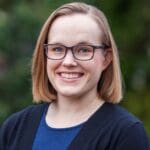 , Fred Hutchinson Cancer Center
Some children with cancer develop a severe and potentially life-threatening inflammatory condition called hemophagocytic lymphohistiocytosis (HLH), but it is not yet clear why certain patients are affected or which treatments work best. Dr. Meyer is using advanced technologies to analyze blood samples from children with cancer who develop HLH and is creating the first mouse model of the disease to better understand its underlying biology. Her goal is to help doctors identify HLH earlier and choose the most effective treatments, improving survival for children with this condition and related immune disorders.
We are incredibly grateful to Allied World for this historic $4.3 million commitment, which will fuel groundbreaking research and improve the lives of children facing cancer. Over the next five years, we look forward to sharing updates on the progress of these Fellows and the critical Survivorship and Supportive Care studies made possible by this partnership.
You can help advance this lifesaving work too — every gift supports research that brings hope, better treatments, and cures to children who need it most.