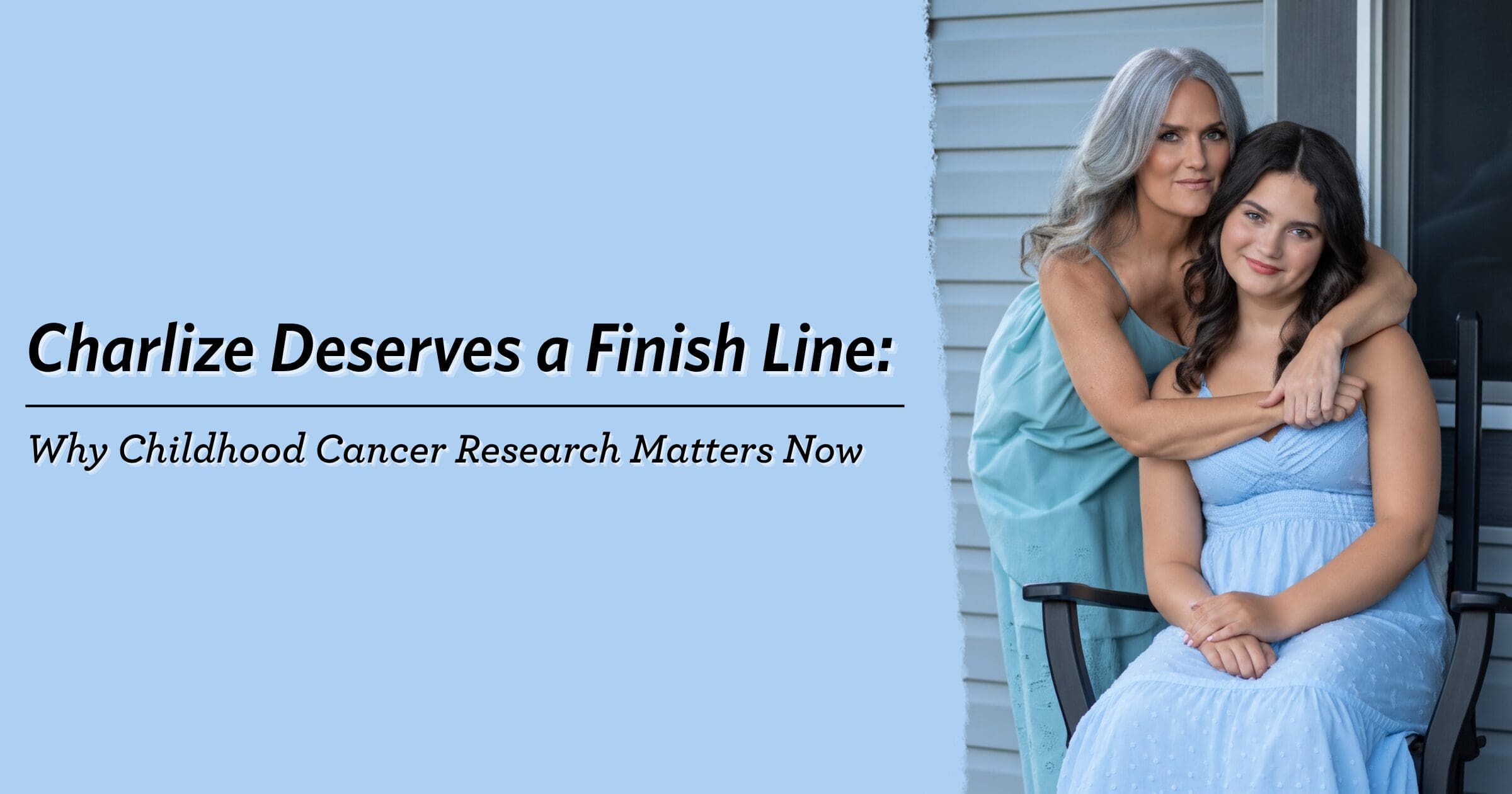
Charlize was 15 when she was diagnosed with diffuse midline glioma (DMG) in February 2026. The following month, she turned 16 in the pediatric intensive care unit.
There is no expected length of treatment for Charlize. With DMG, there is no finish line. There is no ringing a bell and saying treatment is over.
Charlize underwent major surgery to remove as much of her tumor as safely possible, followed by six weeks of radiation and four weeks of intensive inpatient rehabilitation. She is now enrolled in a clinical trial.
Our hope is that treatment continues to work — and that when Charlize needs the next option, there is one.
That is why pediatric cancer research and funding are so critical. Kids like Charlize need more treatment options, more clinical trials and more breakthroughs.
They deserve a finish line. They deserve to ring that bell.
Learning to Live Again After a DMG Diagnosis
Treatment and everything surrounding Charlize’s diagnosis have taken an enormous physical toll.
Following her initial surgery, she required a tracheostomy and feeding tube, and complications led to another surgery. She has experienced significant right-sided weakness, intense nerve pain, fatigue, nausea and other complications.
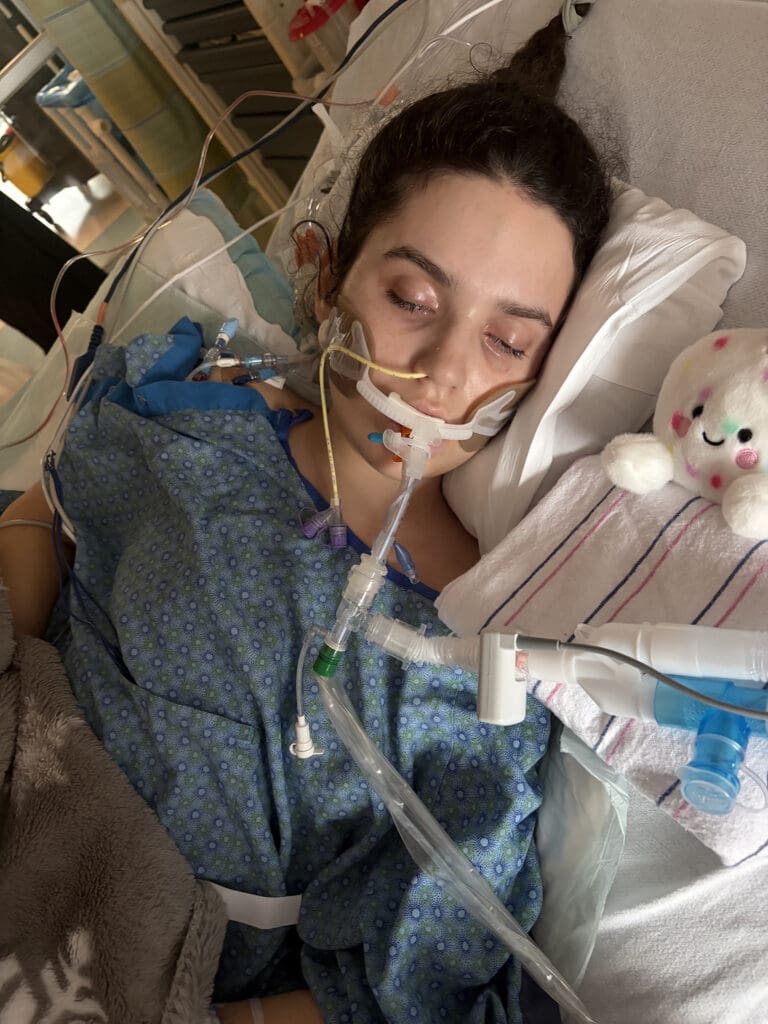
Her rehabilitation started with something most of us never think twice about: learning to hold her own head up again.
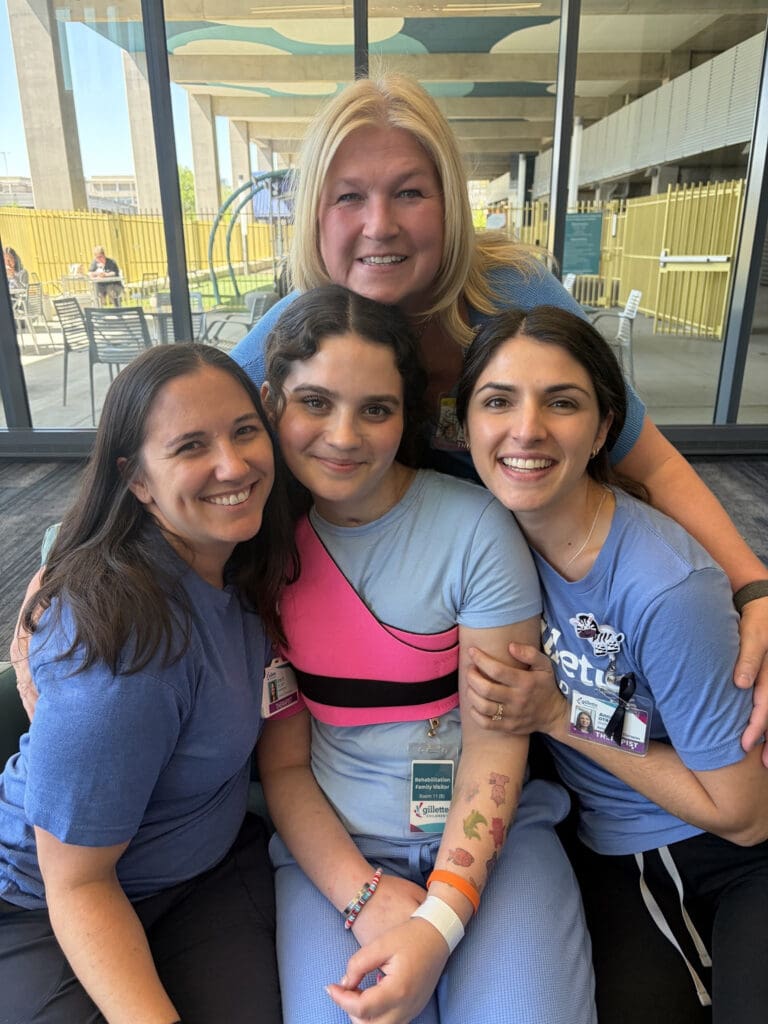
From there, she had to relearn how to walk and eat, and how to rely on her left hand when her right hand no longer worked the way it once did. She spent four weeks in intensive inpatient rehabilitation and continues to work incredibly hard to regain her strength, mobility and independence.
But I think what Charlize has missed most is simply being a normal teenager.
Going to school. Being with her friends. Getting into a car and going somewhere without having to think about accessibility, appointments, medicines or how she is going to feel that day.
So much of that freedom has been replaced by hospitals, therapy, radiation, infusions and appointments.
She misses the freedom of not having to think about cancer.
What Pediatric Cancer Research Really Means
Before Charlize was diagnosed, pediatric cancer research was something I knew was important.
Now I understand what those words actually mean.
They mean options.
They mean time.
They mean hope.
And for families like ours, they can mean life.
One of the most devastating things I have learned is how far pediatric cancer drug development still lags behind what our children deserve. Childhood cancers are rare, which means there are fewer patients and far less financial incentive for pharmaceutical companies to develop drugs specifically for them.
But my daughter’s life should not be less valuable because curing her cancer is less profitable.
Charlize has a cancer for which treatment options are painfully limited. Our family entered a world I never imagined existed — one where parents are expected to research clinical trials and make impossible decisions about which experimental treatment might give their child the best chance.
Nobody should have to choose which trial to try because medicine has run out of proven options for their child.
I don’t want to be an expert in clinical trials. I don’t want to understand eligibility criteria, mutations and experimental treatments.
I just want to be Charlize’s mom.
She should be thinking about friends, driving and what she wants to do with her life. Instead, we are thinking about the next scan. The next treatment. The next trial.
She deserves treatments developed specifically for her disease. She deserves scientists who have enough funding to pursue every promising discovery. She deserves more options.
Research isn’t something Charlize needs someday.
She needs it now.
And somewhere, another parent is going to hear the words, “Your child has cancer,” for the first time.
Research gets to determine what that doctor gets to say next.
I want that answer to be different.
I want them to say, “We know how to treat this.”
Charlize deserves that answer too.
Cancer Changed Our Lives. It Didn’t Change Who Charlize Is.
There is a very clear before and after Charlize’s diagnosis.
Before February, our lives were filled with ordinary things you don’t realize are extraordinary until they are taken away: school, work, friends, family dinners and plans for the weekend.
Then, almost overnight, our world became hospitals, surgeries, radiation, rehabilitation, medicines, clinical trials, scans and appointments.
I became more than Charlize’s mom. I became her caregiver, advocate, researcher, scheduler and voice when she needed one.
But the person who has taught us the most about getting through all of this is Charlize herself.
No matter what has been put in front of her, she just keeps going. And somehow, through everything she has endured, she keeps living.
We call it the Charlie Effect.
It’s the ripple she creates simply by being who she is. Her strength, humor and determination have affected our family, her friends, her medical teams, our community and even people who have never met her.
And in return, we have watched people show up for Charlize in ways we could have never imagined.
There has been so much kindness in the middle of something so incredibly unfair.
We still laugh. We go to the lake. She sees her friends. We celebrate the good scans and the ordinary days. We make plans. We make memories. We keep going.
Cancer divided our lives into a before and after.
Charlize is teaching us how to live in the after.
The Charlie Effect
We call her Charlie. But to most people, she starts as Charlize. Charlize at school. Charlize at an appointment. Charlize in a story someone reads or a photo someone sees.
And then, somewhere along the way, something changes.
Maybe she becomes your patient, maybe you meet her once. Maybe you only know her through her story.
Or maybe, for whatever reason, she opens that door and lets you see her.
And then there are the people she has touched firsthand. The ones who have cared for her, worked with her, sat beside her, laughed with her, cried with her, held her when they didn’t know her, or simply spent enough time in her orbit to feel it for themselves. Some were meant to be in her life for a shift, an appointment, a class, or a season – and somehow, they stayed.
Maybe it’s something she says – or something she probably shouldn’t have said. Maybe it’s her laugh. The way she cares about other people. The way she keeps fighting and somehow never complains about how unfair any of this is.
There isn’t one big moment when it happens.
It’s a feeling.
You start rooting for her. You start to feel like you know her. You feel her. And somewhere along the way, without anyone telling you to, Charlize becomes Charlie.
Because now she means something to you.
She’s Charlie. Our Charlie.
And that’s the Charlie Effect.
Charlize Is So Much More Than Her Cancer
Kids with cancer are still kids.
They still want to go to school, be with their friends, laugh, argue with their parents, stay up too late and worry about all the normal things kids worry about.
Charlize is no different.
She is funny. She has the biggest heart. She loves hard. She loves love. She keeps her circle tight, but when you’re in, you’re in.
She still has a messy room. She still wants to be with her friends, laugh and have fun.
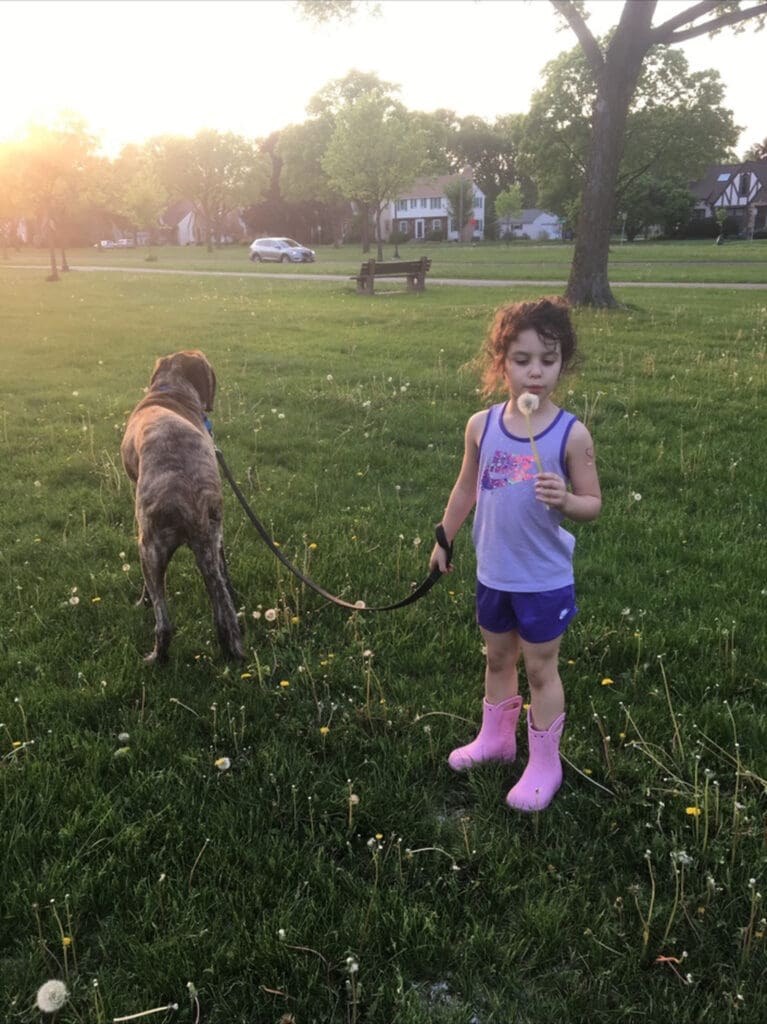
And she wants another dog, because apparently two Bullmastiffs taking up most of her bed simply isn’t enough.

Cancer is something that happened to Charlize. It is not who Charlize is.
She is not cancer.
She is not a disease.
She is a 16-year-old girl with a huge heart and an entire life that belongs to her.
She is the kind of person who, when she was told she had cancer, asked, “Will my mom and dad get it?”
She is the kind whose hospital room somehow becomes the place where nurses, therapists, doctors, social workers, administrators — and just about anyone who has ever crossed her path — end up gathering. Before long, it turns into a BS session full of laughter, and for a little while, we all forget we’re sitting in a hospital room.
That is Charlize.
She’s mine, forever and always.
And when I grow up, I want to be like her.
The Finish Line Charlize Deserves
I hope she gets to be 17.
I hope she gets to be 18. And 21. And 30.
I hope she gets more dogs than any reasonable person should own. I hope she gets annoyed with me. I hope she makes terrible teenage decisions. I hope she falls in love. I hope she gets her heart broken and calls me crying.
I hope she figures out who she wants to be and changes her mind ten times.
I hope she gets time.
Time to grow up.
Time to live.
Time to have a future that isn’t measured in MRIs, treatments and clinical trials.
I don’t want to spend my life hoping for milestones other parents simply get to expect.
I want to expect them too.
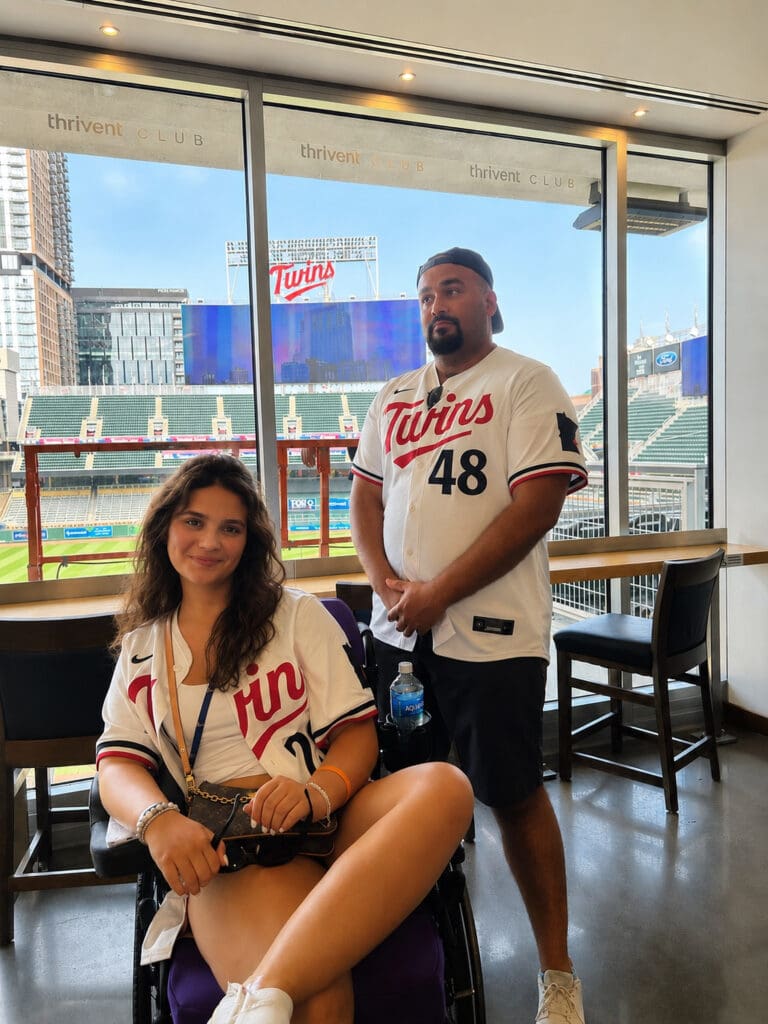
I want to complain that she has too many dogs. I want to worry when she doesn’t call me back. I want to watch her make mistakes, change her mind, fall down, get back up and become whoever she decides she wants to be.
I don’t need extraordinary.
I just want my daughter to have the chance to live an ordinary, beautiful, messy, long life.
That is my hope for Charlie.
And that is why pediatric cancer research matters.
Because children like Charlize deserve more than limited options. They deserve more than experimental treatments and impossible choices.
They deserve the chance to grow up.
They deserve a finish line.