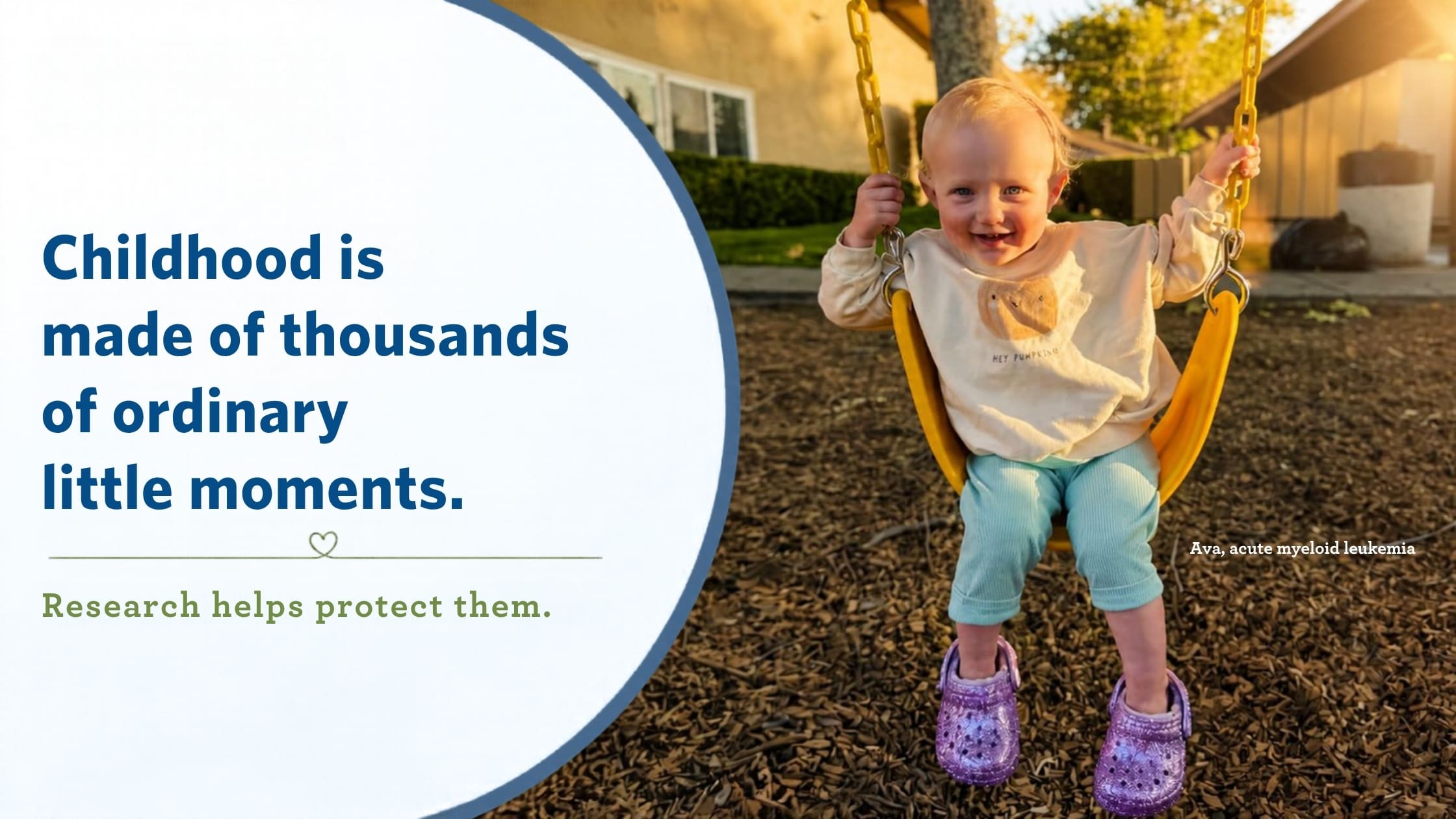
A favorite swing. A fishing trip with Dad. Wrestling with a big brother. A new hobby. A joke that makes absolutely no sense.
Most of the time, we don’t think twice about them.
But when a child is diagnosed with cancer, ordinary childhood can suddenly be replaced by hospital stays, surgeries, chemotherapy, scans, and uncertainty.
At the St. Baldrick’s Childhood Cancer Research Foundation, we fund research for the big breakthroughs — better treatments, safer treatments and cures — and for all the moments those breakthroughs make possible.
Because research doesn’t just change statistics. It changes childhoods.
|
85%
|
Progress Is Possible On average, 85% of children survive at least five years. But there are still many childhood cancers with lower survival. And five years isn’t enough. Decades of research have changed what’s possible for some cancers. But progress hasn’t reached every child. |
For some childhood cancers, survival has improved dramatically. For others — particularly certain brain tumors, bone cancers and cancers that relapse or spread — the odds remain far too low. And for many children who survive, treatment can leave serious health effects that last a lifetime.
That’s why there’s still so much work to do.
And why St. Baldrick’s funds research across childhood cancer types — from some of the most common to the rarest and hardest to treat.
Behind that research are kids like Lilah, Ava, Sebastian, Ace and Waylon.
Their stories show both how far research has come — and how much further it needs to go for kids with cancer.
Lilah: More Ordinary Days Together
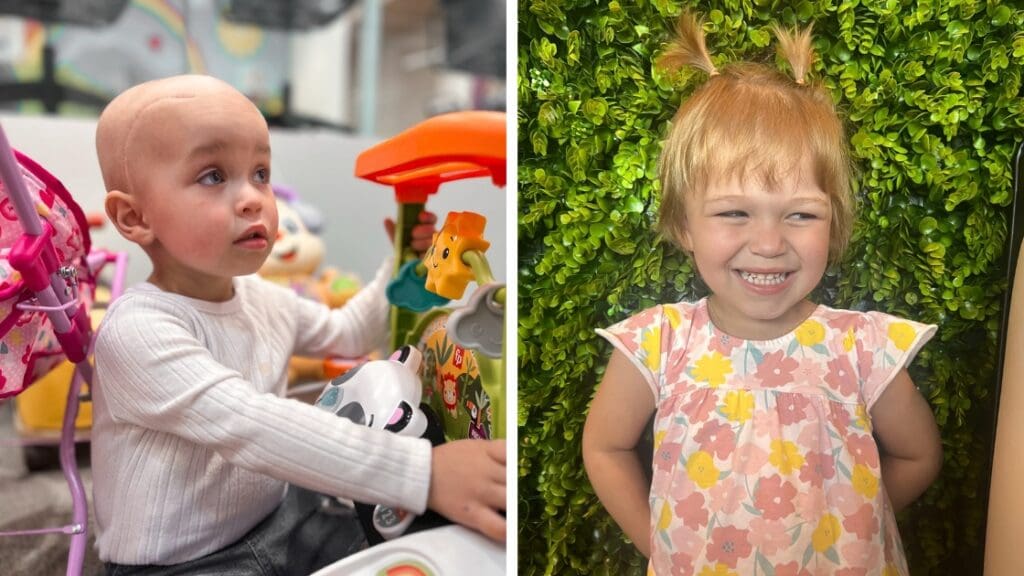
There was a time when Lilah’s family was preparing for the possibility of losing her.
Diagnosed with AT/RT, a rare and aggressive brain tumor, Lilah’s mom found herself having conversations no parent imagines having — about hospice, funeral arrangements and when it might be time to stop treatment.
Today, those conversations look very different.
Lilah’s latest reported scans show no new evidence of disease. She’s energetic, growing and sporting a full head of hair. Her family gets to watch her simply be a kid.
For Lilah’s family, another ordinary day together means everything.
Research Spotlight
Finding a New Way to Attack AT/RT
St. Baldrick’s-funded researcher Dr. Eric Raabe of Johns Hopkins University School of Medicine and his team discovered that AT/RT cells rely on a stress-response system to survive. By targeting that system with a drug combined with chemotherapy, they triggered tumor cell death and extended survival in laboratory models.
The findings are helping move this approach toward a clinical trial for children with relapsed or treatment-resistant AT/RT.
Why it matters: This research could lead to a new treatment option for children facing this aggressive cancer.
Ava: When a Swing Became Something Extraordinary
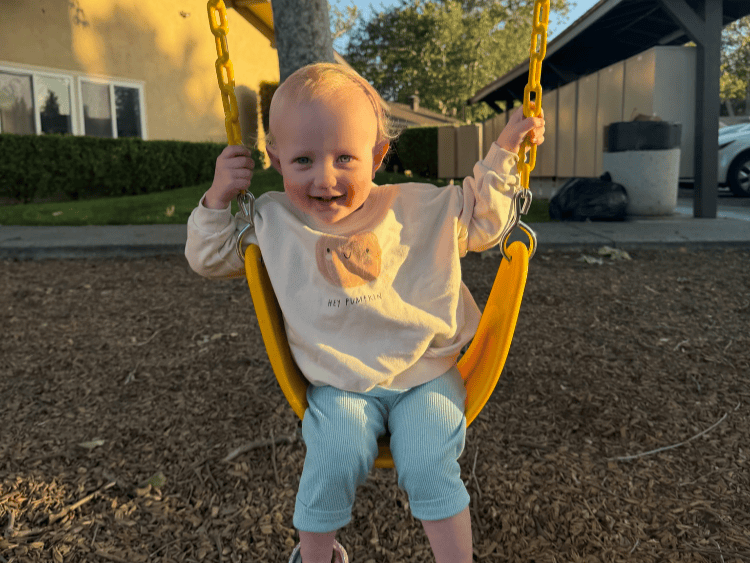
Before cancer, a swing was just a swing.
Then Ava was diagnosed with an extremely rare form of acute myeloid leukemia.
Her treatment has included intensive chemotherapy, radiation, and a stem cell transplant. At one point, her mom was terrified she’d never bring Ava home to her favorite swing again.
Then came a day her family won’t forget.
Ava was home, laughing and giggling on that swing beside her big brother, with no detectable leukemia on her tests at the time.
For most families, it might have looked like an ordinary afternoon.
For Ava’s family, it was anything but ordinary.
Research Spotlight
Finding the Leukemia Other Tests Can Miss
St. Baldrick’s-funded researcher Dr. Scott Furlan and his team at Fred Hutchinson Cancer Research Center are using advanced single-cell genomic technology to find residual leukemia cells that may remain after treatment.
Their goal is to develop more sensitive tests that can identify which children are in deep remission and which may be at greater risk of relapse.
Why it matters: Detecting these hidden cells could help doctors intervene earlier and make better treatment decisions.
Want to be part of what’s next? Your support helps St. Baldrick’s fund research for kids like Ava. Donate today.
Ace: Getting Back to Being a Kid
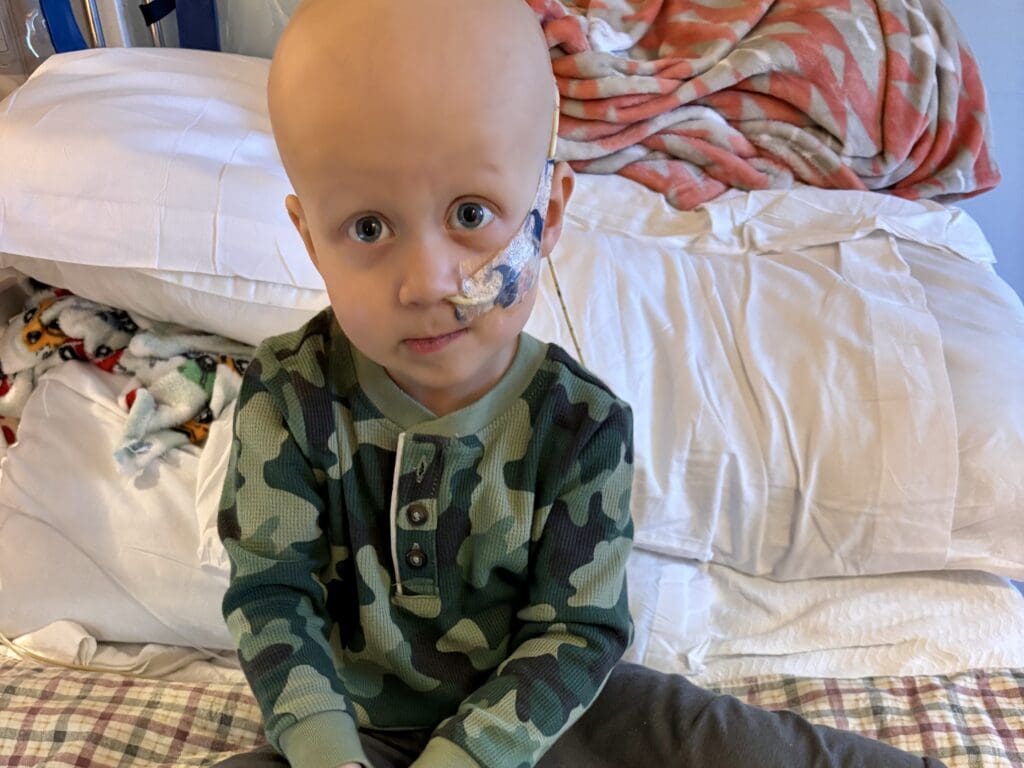
Ace loves golf, skipping rocks, monster trucks, kayaking and asking a million questions.
But after he was diagnosed with rhabdomyosarcoma at just 23 months old, much of ordinary childhood was replaced by 10 rounds of chemotherapy and three surgeries. Treatment caused neuropathy that affected his walking, and he relied on a feeding tube for months.
Along the way, Ace discovered golf — something to look forward to even on the hardest days.
Today, Ace has no evidence of disease. But his experience is a reminder that survival isn’t the only goal.
Kids deserve treatments that give them the chance to thrive, too.
Research Spotlight
Building New Treatments for Rhabdomyosarcoma
St. Baldrick’s-funded researcher Dr. Yael Mosse and her colleagues at Children’s Hospital of Philadelphia are developing new immunotherapies for rhabdomyosarcoma. Their work includes identifying targets that could help immune cells attack the cancer and an antibody-drug treatment designed to deliver medicine directly to tumor cells.
Why it matters: These approaches could lead to more effective, less harmful treatments for children with rhabdomyosarcoma.
Sebastian: For the Kids Still Waiting for a Breakthrough
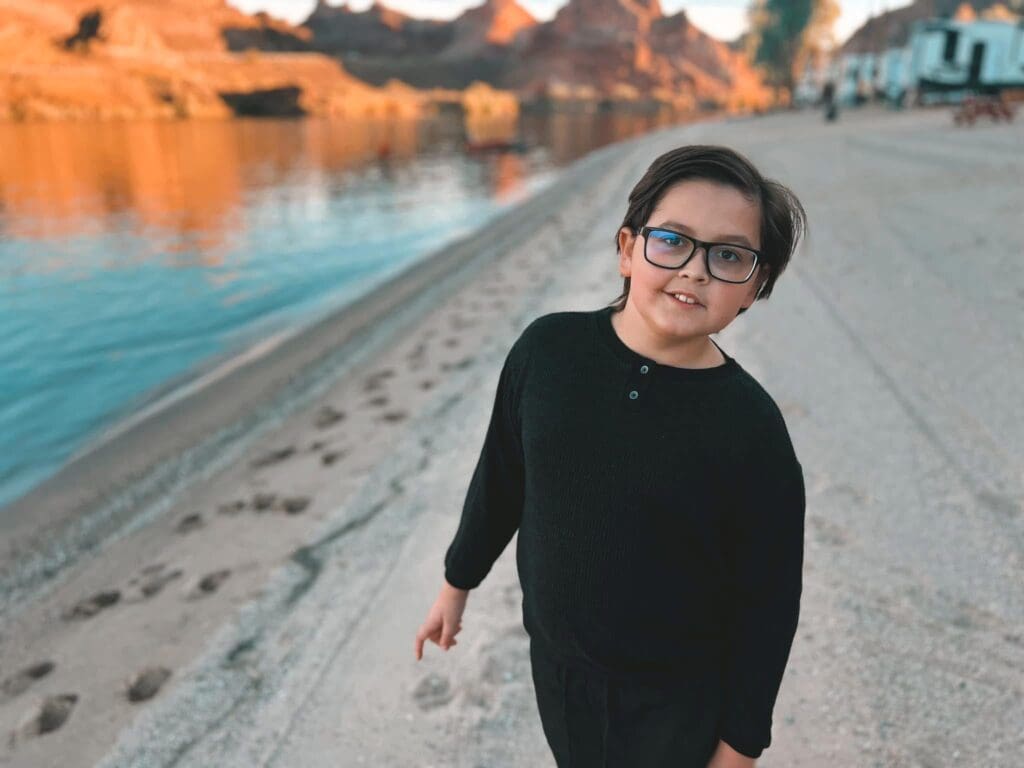
Research has changed what’s possible for many children with cancer. Sebastian reminds us why we can’t stop there.
Sebastian loved pandas, the color green and making people laugh. He dreamed of becoming a YouTuber and described himself as having a “community heart.”
On his 10th birthday, he was diagnosed with diffuse midline glioma (DMG), an aggressive brain tumor. For some forms of DMG, three-year survival remains below 5%.
Sebastian packed a lot of living into the time he had, from visiting the Eiffel Tower to touring the White House. But shortly after his 11th birthday, he died.
Before he died, Sebastian donated six of his tumors to research, hoping scientists could learn from his cancer and someday help another child.
Research Spotlight
Searching for DMG’s Weaknesses
St. Baldrick’s Scholar Dr. Yang Li at Washington University in St. Louis is working to understand the genetic and epigenetic changes that allow DMG tumors to grow.
Using cutting-edge single-cell analysis and advanced AI models, the team is mapping how these tumors work and identifying the genetic switches and mutations that may be driving them.
The hope is to uncover vulnerabilities researchers can eventually target with new treatments.
Why it matters: For cancers like DMG, where children still have far too few effective treatment options, understanding the biology of the disease is a critical step toward finding a cure.
Waylon: Back to the Adventures Cancer Put on Hold
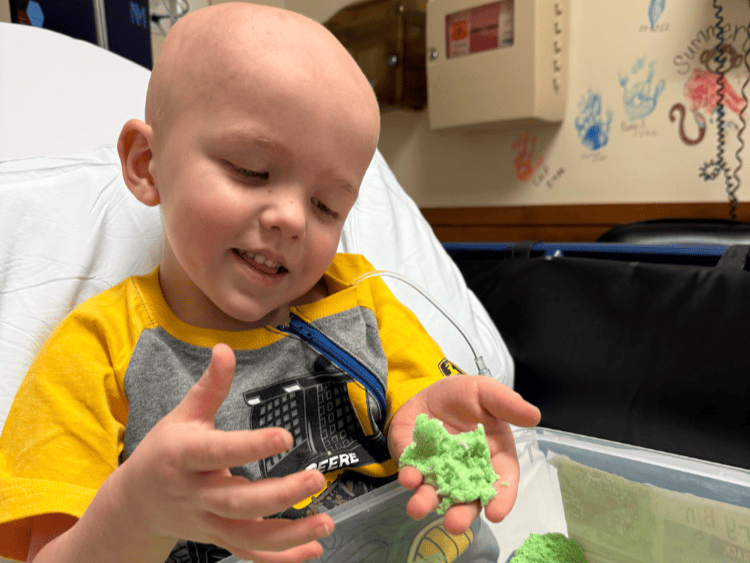
Waylon loves getting dirty — fishing, riding four-wheelers and wrestling with his big brother, Arlyn.
But at just 3 years old, a medulloblastoma diagnosis replaced everyday adventures with brain surgeries, radiation and chemotherapy.
In April, Waylon rang the bell to celebrate finishing chemotherapy and is getting back to the things he loves. But treatment has left its mark, including hearing loss.
His story is a reminder that kids need treatments that don’t just save lives, but protect their futures, too.
Research Spotlight
Helping the Immune System Fight Medulloblastoma
St. Baldrick’s-funded researcher Dr. Anusha Preethi Ganesan at the University of California, San Diego is testing whether combining targeted therapy with immunotherapy can better fight medulloblastoma, using 3D versions of patients’ tumors and their immune cells.
Why it matters: This work could help uncover more effective ways to treat medulloblastoma.
For the Big Breakthroughs — and Everything They Make Possible
Every two minutes, another child somewhere in the world is diagnosed with cancer.
Each one has an entire childhood unfolding around that diagnosis.
Birthdays they haven’t celebrated yet. Friends they haven’t met. Places they haven’t explored. Sports they haven’t tried. Dreams they haven’t even had the chance to dream.
At St. Baldrick’s, we’re committed to funding the most promising childhood cancer research — for the breakthroughs that save lives and give kids more time to simply be kids.
A swing. A fishing trip. A golf club. A ridiculous joke. Another ordinary day.
Research makes more childhood possible.