Brain tumors are the leading cause of cancer-related death in children. For children diagnosed with rare or aggressive brain cancers, treatment options can be limited.
Researchers, supported in part by St. Baldrick’s Childhood Cancer Research Foundation, are exploring new approaches to improve survival and develop more effective treatments for children and young adults.
Improving Outcomes for Relapsed NGGCTs
Nongerminomatous germ cell tumors (NGGCTs) are a type of germ cell tumor that can develop in the brain or central nervous system. They are different from germinomas and tend to be more difficult to treat. While many children with NGGCTs can be successfully treated, some tumors return after treatment or do not respond to therapy. When this happens, treatment can be especially challenging because there is no single standard approach for relapsed or treatment-resistant NGGCTs.
 St. Baldrick’s Fellow, Dr. Mohammad Abu Arja, and colleagues analyzed data from multiple international centers to better understand which treatments may help children and young adults whose NGGCTs had returned or stopped responding to treatment.
They found that some more intensive treatments were associated with better survival.
Patients who received high-dose chemotherapy followed by stem cell rescue had a 3-year overall survival rate of 76%, compared with 5.3% among those who did not receive this treatment. High-dose chemotherapy can damage the bone marrow, which is why stem cell rescue may be used to help restore blood-forming cells after treatment.
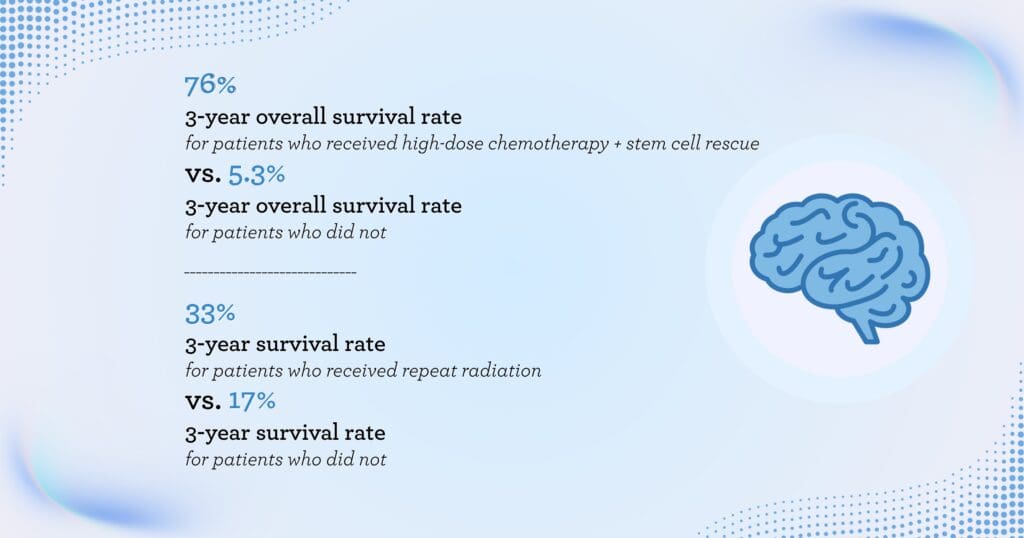
The researchers also looked at repeat radiation therapy. Patients who received repeat radiation had a 3-year survival rate of 33%, compared with 17% among those who did not. Repeat radiation can also be complex because patients may have already received radiation to the brain or central nervous system.
 The first year of Dr. Abu Arja’s research was funded by and named for the Be Brooks Brave Fund, honoring Brooks, who was diagnosed with inoperable brain and spinal tumors at age 5. Despite his diagnosis, Brooks taught so many people about love and the meaning of life. He was brave beyond his years, inspiring others with his “faith over fear” attitude.
Advancing Childhood Brain Tumor Research
The findings offer an encouraging signal for children and young adults facing relapsed brain tumors, but more research is needed. The study included a small number of patients, and other differences between patients may have influenced the results.
Because NGGCTs can be rare and difficult to treat, continued research and collaboration are essential to identifying better therapies and improving outcomes. While these findings represent steps forward rather than guaranteed cures, they offer important opportunities to learn more about childhood brain cancer and develop new treatment strategies.
For children facing rare and aggressive brain tumors, every research discovery brings us closer to better treatments and better outcomes.