For some children with cancer, a clinical trial may offer their best chance at a cure. But accessing one isn’t always easy.
| AT A GLANCE
Why these childhood cancer research grants matter:
|
When a child is diagnosed with cancer, families want to know that every possible treatment option is available. For some, that means participating in a clinical trial that offers access to promising new therapies. But depending on where a family lives, those opportunities may be hundreds or even thousands of miles away.
At the St. Baldrick’s Childhood Cancer Research Foundation, we believe where a child lives shouldn’t determine their access to potentially lifesaving treatments.
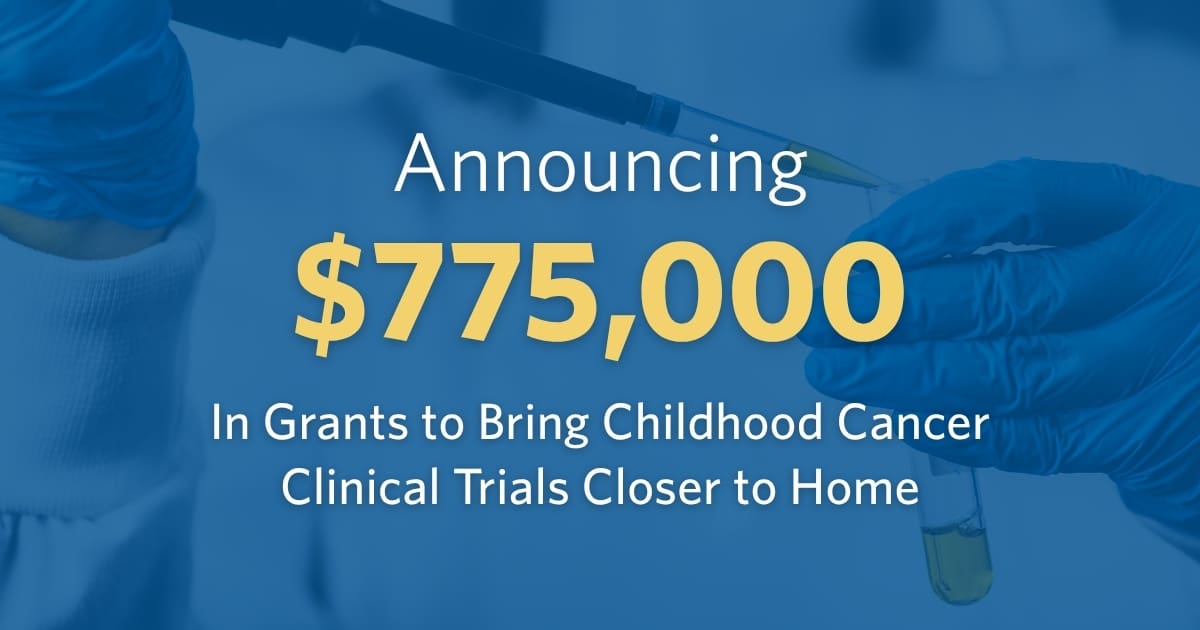
That’s why we’re awarding $775,000 in new Infrastructure Grants to 16 institutions across the country, helping strengthen the hospital teams and resources needed to bring more childhood cancer clinical trials to more children.
Why Are Clinical Trials Important for Children With Cancer?
Every breakthrough in childhood cancer treatment begins with research. And clinical trials are a critical step in turning promising discoveries into treatments that can help children survive cancer and live longer, healthier lives.
Through clinical trials, researchers can test new therapies, improve existing treatments, and learn how to reduce the long-term side effects children may experience.
For children whose cancer hasn’t responded to standard treatments, or whose cancer has returned, a clinical trial may offer an important additional treatment option — and sometimes their best hope for a cure.
But clinical trials do more than offer hope to the children participating today. They help researchers answer important questions that can improve care for children diagnosed tomorrow.
Without clinical trials, promising discoveries can’t become proven treatments. And without the right resources, hospitals can’t offer as many of these critical opportunities to patients.
Why Access to Childhood Cancer Clinical Trials Matters
For many families, accessing a clinical trial can mean traveling long distances to a major pediatric cancer research center.
That can mean time away from work, separation from siblings, additional expenses, and the emotional strain of being far from home during an already difficult time.
While some specialized trials will always require travel, expanding clinical research capabilities at hospitals across the country can help more children access treatment options closer to their families and support systems.
And that matters.
A child receiving cancer treatment should have every opportunity to spend time at home, sleep in their own bed, see their siblings, and experience the everyday moments of childhood whenever possible.
By supporting clinical research teams at hospitals in communities across the country, St. Baldrick’s is helping make participation in childhood cancer clinical trials possible for more families, regardless of where they live.
What Does It Take to Make Childhood Cancer Clinical Trials Possible?
When we think about childhood cancer research, we often picture scientists working in laboratories or doctors developing new treatments.
But there’s another essential part of the research process that doesn’t always get the attention it deserves: the people who make clinical trials possible.
Clinical research associates, research nurses, coordinators, and other support staff work behind the scenes to help hospitals open and manage complex clinical trials.
They coordinate studies, collect and manage research data, help ensure safety requirements are met, and guide families through the clinical trial process.
Without these dedicated professionals, even the most promising research may never reach the children who need it.
That’s where St. Baldrick’s Infrastructure Grants make a difference.
Rather than funding a single research project, these grants strengthen the teams and resources hospitals need to participate in clinical research. They can help institutions build the capacity to open and manage more trials, support more patients, and contribute to discoveries that improve childhood cancer treatment.
It’s an investment in the people and systems that help turn research into real treatment opportunities for kids.
St. Baldrick’s Awards $775,000 to Expand Childhood Cancer Clinical Trials
This latest round of St. Baldrick’s Infrastructure Grants will support 16 institutions in 15 states, from large pediatric research centers to hospitals serving communities farther from major medical hubs.
Each institution plays an important role in expanding the reach of childhood cancer research and helping more children and families access clinical trials.
2026 St. Baldrick’s Infrastructure Grant Recipients:
California
- UCSF Benioff Children’s Hospital Oakland, Oakland
- Valley Children’s Healthcare, Madera
Hawaii
- Kapi’olani Medical Center for Women & Children, Honolulu
Illinois
- UI Health, Chicago
Iowa
- Blank Children’s Cancer and Blood Disorders Center, Des Moines
Louisiana
- LSU Health New Orleans, New Orleans
Michigan
- Children’s Foundation of Michigan, Detroit
Missouri
- SSM Health Cardinal Glennon Children’s Hospital, St. Louis
New Jersey
- Hackensack Meridian K. Hovnanian Children’s Hospital, Edison
New Mexico
- University of New Mexico Health Sciences Center, Albuquerque
New York
- Upstate Cancer Center, Syracuse
North Carolina
- Wake Forest University School of Medicine, Winston-Salem
Texas
- El Paso Children’s Hospital Foundation, El Paso
- Baylor College of Medicine, Houston
Virginia
- Children’s Hospital of The King’s Daughters, Norfolk
Wisconsin
- HSHS Wisconsin Clinical Research Institute, Green Bay
Together, these institutions help strengthen a nationwide network of childhood cancer clinical research, creating opportunities to advance treatments and reach more children who need them.
Help Fund the Next Breakthrough in Childhood Cancer Research
Since 2005, St. Baldrick’s has awarded more than $383 million in childhood cancer research grants, funding the best research wherever it takes place.
And that commitment goes beyond discovering new treatments. It means helping ensure promising research can move forward, clinical trials can reach more patients, and children have access to the best possible care.
These 16 new grants are possible because of the generosity of St. Baldrick’s supporters — people who shave their heads, organize fundraisers, make donations, and believe every child deserves a chance at a long, healthy life.
Every dollar raised helps move childhood cancer research forward, from discovering promising new treatments to making clinical trials more accessible to children and families across the country.
Because finding better treatments is only part of the fight. We need to make sure those treatments can reach the kids who need them.