June is National Cancer Survivor Month, a time dedicated to honoring cancer survivors and reflecting on how far cancer research has come—and how much further it must go.
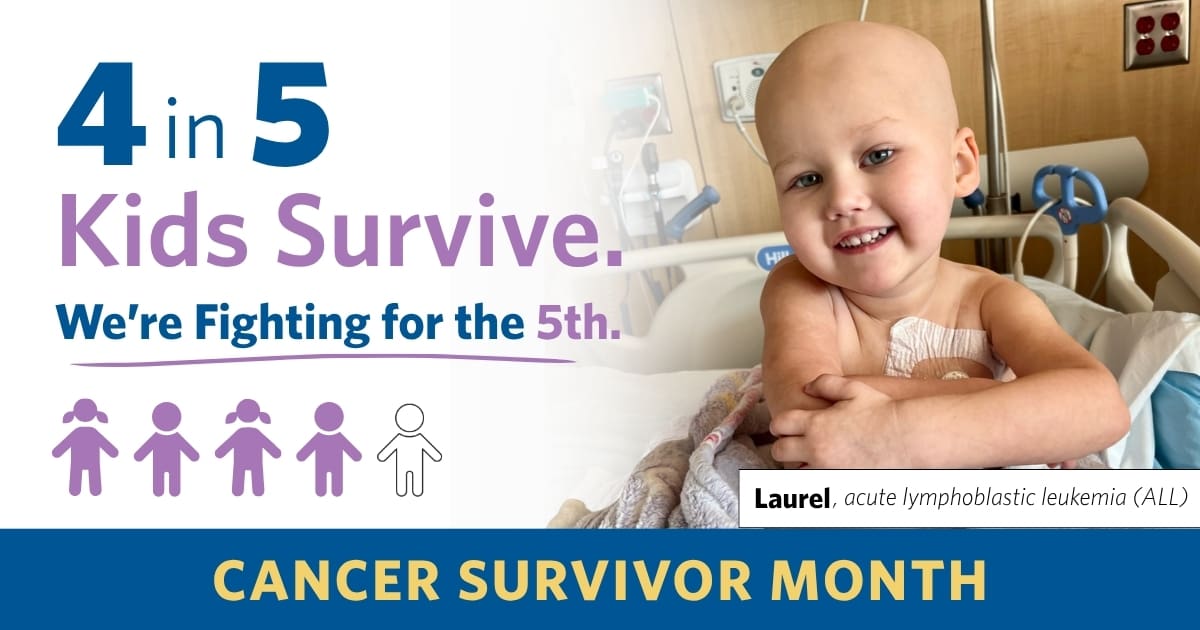
For childhood cancer, the progress is real. Today, about 4 in 5 children diagnosed with cancer will survive at least five years after diagnosis. This is one of the most powerful success stories in modern medicine.
But survival is not the end of the story.
It is the beginning of survivorship—and the beginning of our responsibility to do better.
What Is National Cancer Survivor Month?
National Cancer Survivor Month is observed every June to celebrate people living with and beyond cancer. It recognizes the physical, emotional, and lifelong journey of survivorship.
For childhood cancer survivors, survivorship begins at diagnosis and continues long after treatment ends. It includes not only remission and recovery, but also ongoing health monitoring, emotional healing, and long-term effects from treatment.
Survivorship means:
- Living beyond cancer
- Managing long-term side effects
- Navigating life after treatment
- And redefining what “healthy childhood” looks like
This month is about honoring every part of that journey.
Childhood Cancer Survivorship Statistics: How Far We’ve Come
The progress in childhood cancer survival over the past several decades has been extraordinary—and hard-won.
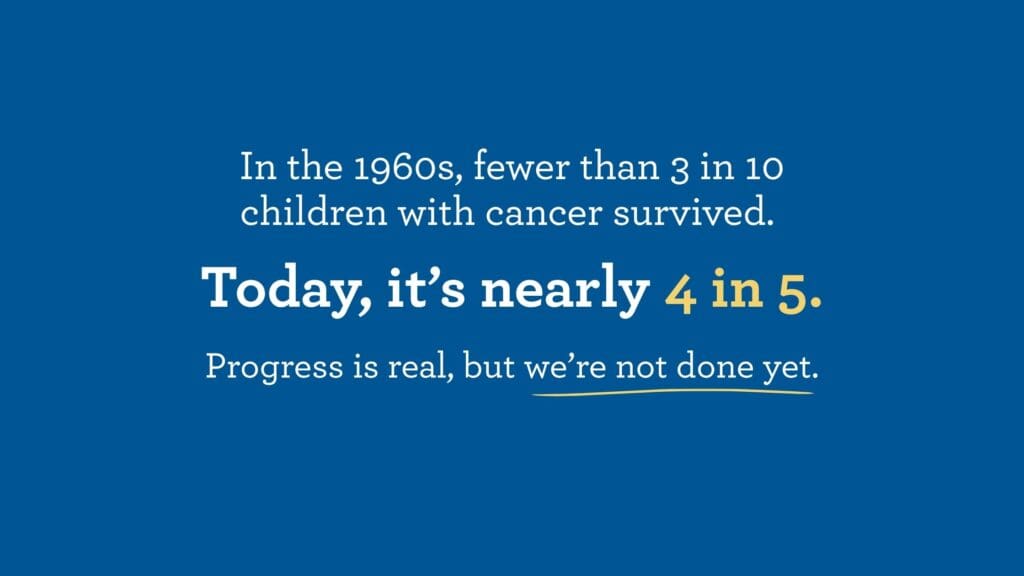
In the 1960s, childhood cancer was often considered untreatable. Fewer than 1 in 3 children survived beyond five years, and for certain diagnoses such as acute lymphoblastic leukemia (ALL), survival was tragically rare.
By the 1970s, new combination chemotherapy approaches began to shift what was possible, and survival rates improved to roughly around 60%.
Through the 1980s and 1990s, treatment became more precise and more strategic. Risk-adapted therapy allowed doctors to tailor intensity—strengthening treatment for aggressive cancers while reducing unnecessary toxicity for others. During this period, survival rates continued climbing into the 70% range.
In the early 2000s and 2010s, advances in pediatric oncology research, imaging, supportive care, and clinical trials pushed survival rates into the 80–85% range.
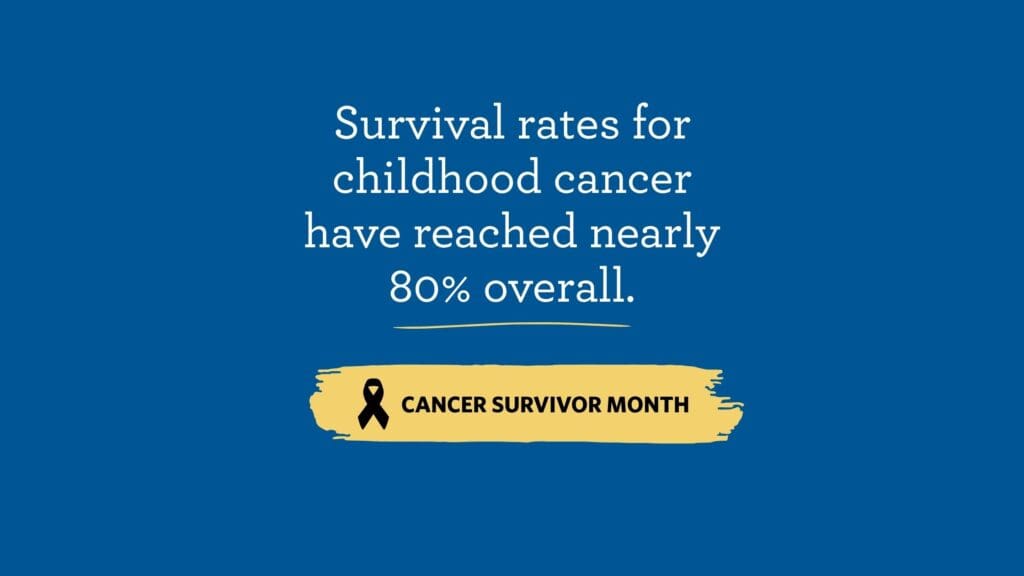
Today, overall five-year survival for childhood cancer is approaching 90%, with some of the most common childhood cancers—like ALL and Hodgkin lymphoma—now seeing survival rates that exceed 90% in many cases.
What Childhood Cancer Survivorship Really Means
Survivorship is more than a milestone—it is a lifelong experience.
Many childhood cancer survivors face long-term or late effects from treatment, including:
- Secondary cancers
- Heart or organ damage
- Growth and developmental challenges
- Cognitive or learning difficulties
- Emotional and mental health impacts
This is why survivorship care and childhood cancer research remain so critical.
Because survival alone is not enough—we must also focus on quality of life after cancer.
We Celebrate Survivors. We Continue the Fight.
We celebrate survivors this month.
Because today, 4 out of 5 kids diagnosed with cancer survive.
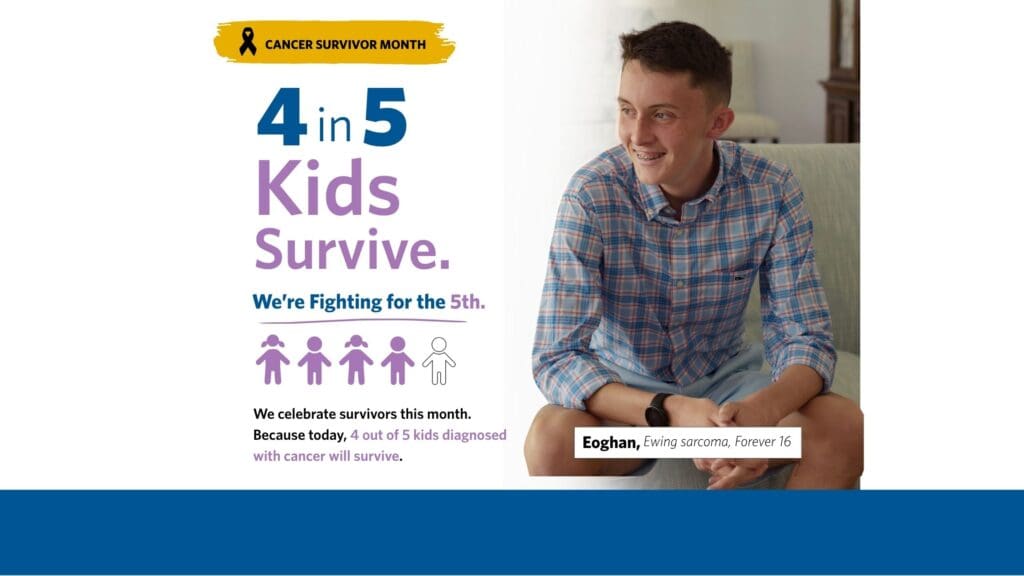
That number represents decades of progress, innovation, and relentless research.
But we are not finished.
Because 1 in 5 children still will not survive childhood cancer.
And because too many survivors still carry the lifelong burden of treatment that saved them.
Where Childhood Cancer Research Goes Next
The future of childhood cancer survivorship depends on continued research.
Your support helps fund progress that:
- Develops safer, less toxic treatments
- Improves survival for the hardest-to-treat childhood cancers
- Reduces long-term side effects for survivors
- Advances cures so every child has a chance to grow up
Every breakthrough begins with research. Every survivor begins with hope backed by science.
Why National Cancer Survivor Month Matters
National Cancer Survivor Month is not only about looking back—it’s about pushing forward.
It reminds us that:
- Survivorship is growing every year
- Childhood cancer outcomes have improved dramatically
- But disparities and challenges still remain
- And research is the key to the next breakthrough
This is a moment to celebrate progress—and recommit to what comes next.
4 in 5 Kids Survive. We’re Fighting for the 5th.
This month, we honor childhood cancer survivors—the children who made it through, and the lives forever changed by what they endured.
We honor the families who carried them through every treatment, every setback, and every uncertain moment.
And we honor the researchers and medical teams working every day to turn progress into something even greater: cures that are safer, smarter, and more effective for every child.
Because survival is not the finish line.
It is what makes the next breakthrough possible.
And it’s why your support matters now.
Join us this National Cancer Survivor Month by donating today to help fund the research that will save more children—and improve life for every child who follows.