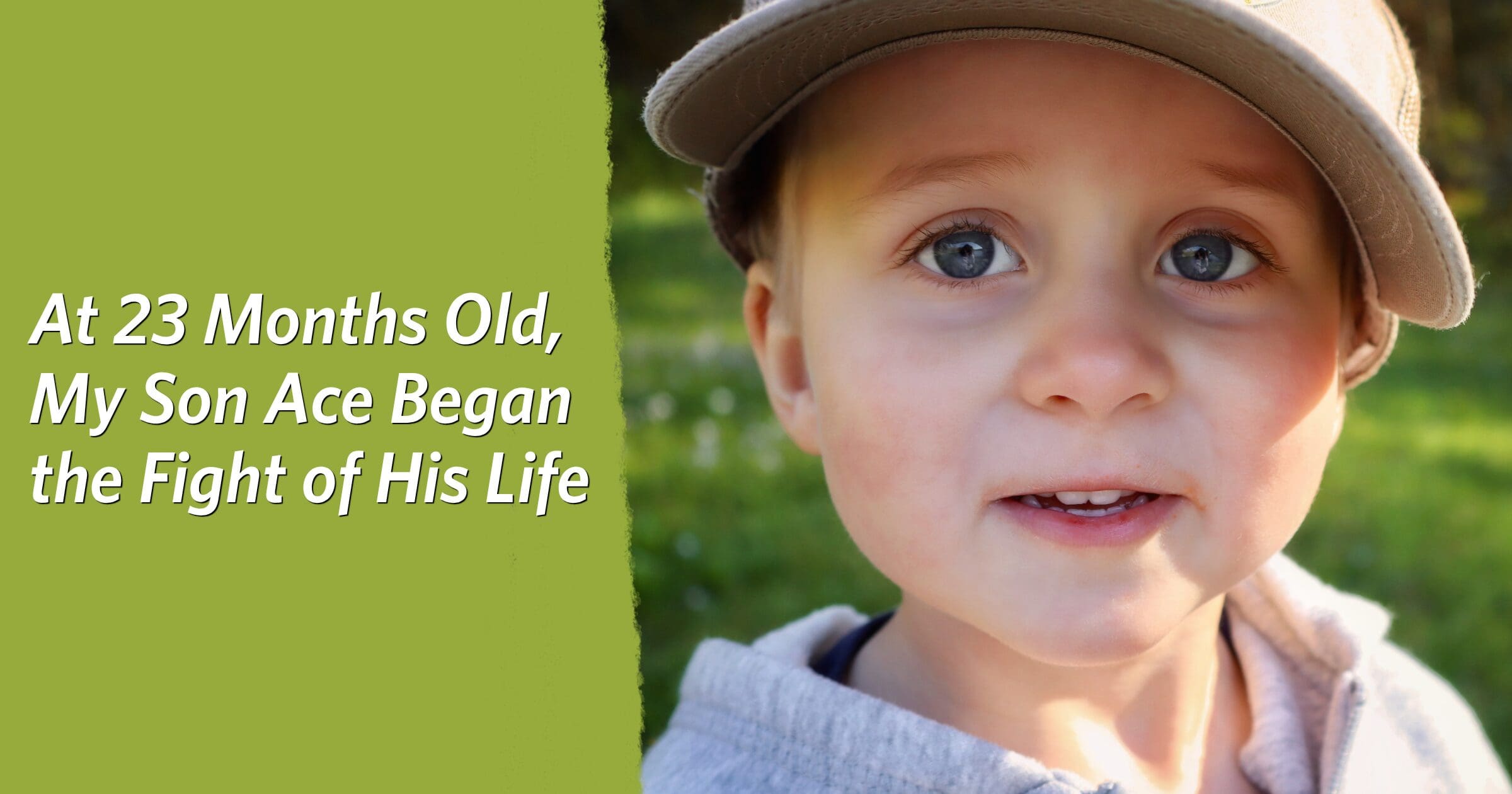
When my son Ace was just 23 months old, he was diagnosed with childhood cancer – rhabdomyosarcoma. Like every family who hears those words, our lives changed in an instant.
From March to November 2025, Ace underwent 10 rounds of VAC chemotherapy. He had two surgeries to biopsy and remove his tumor, along with countless MRIs, CT scans, blood draws, and blood and platelet transfusions.
Today, we are incredibly grateful that he has no evidence of disease (NED), but our journey isn’t over. Every three months, Ace has follow-up scans to check for recurrence. While treatment has ended, the fear of childhood cancer returning is something our family continues to live with.
The Reality of Childhood Cancer Treatment
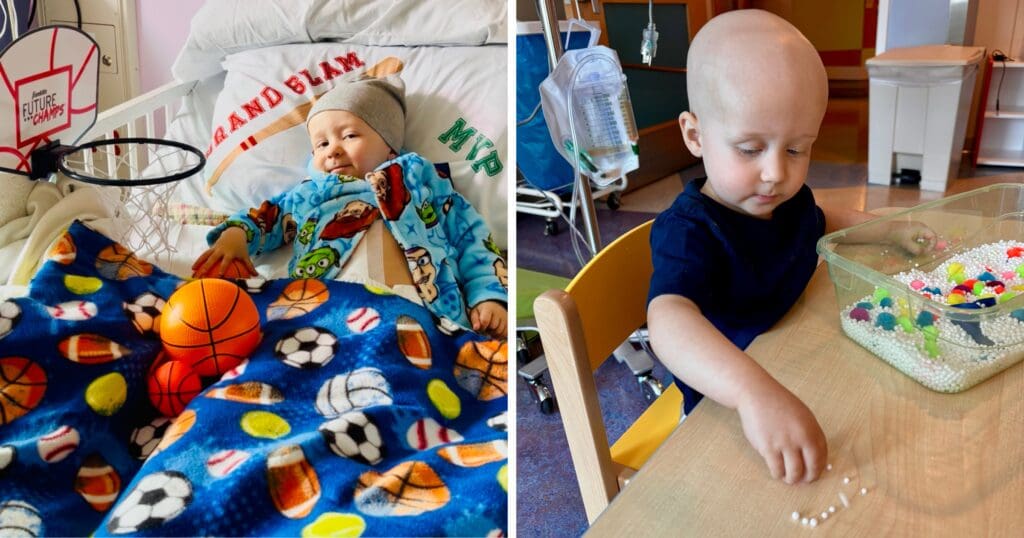
Treatment took a tremendous toll on Ace. He developed neuropathy, especially in his feet, which affected his balance and the way he walked. He had an NG tube for many months after he stopped eating by mouth entirely, and there were days when he vomited up to 10 times. Watching your child endure that is something no parent should ever experience.
Life changed in so many ways while Ace was in treatment. Whenever he was neutropenic, we had to isolate as a family to keep him safe from infection. He missed seeing his friends at the YMCA, playing with his cousins, going to carnivals and playgrounds, and celebrating birthdays and holidays the way kids should. I think missing out on those everyday childhood moments was one of the hardest parts for him.
Finding Joy During Pediatric Cancer Treatment
One of the brightest spots during treatment came from somewhere we never expected: golf.
Once Ace picked up his first putter, everything changed. He suddenly wanted to be outside again. He became fascinated with the game and wanted to practice, watch golf, and learn everything he could. That newfound passion gave him something to look forward to during treatment and helped carry him through some incredibly difficult days.
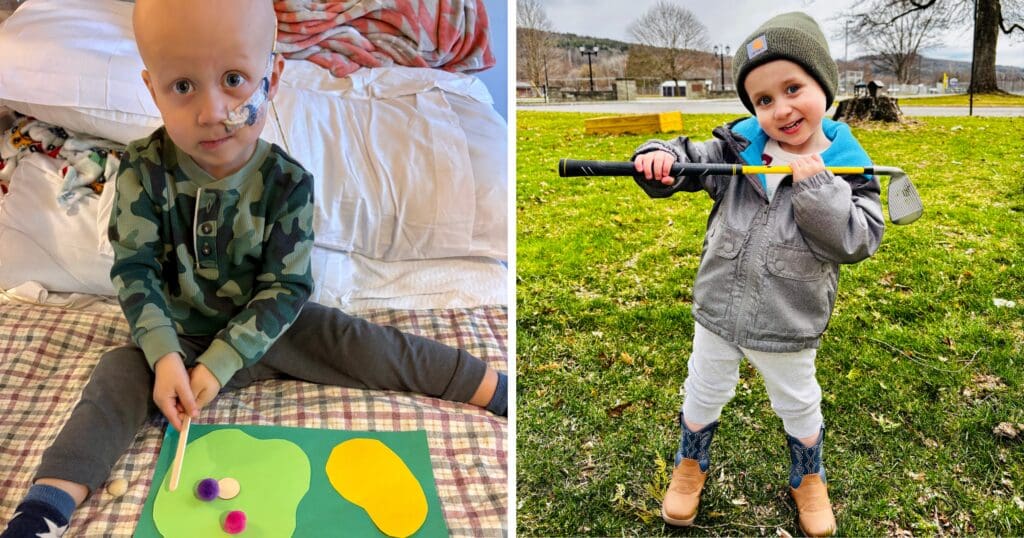
Outside of golf, Ace has a gigantic personality packed into a tiny body. He loves to play and include everyone around him. He enjoys kayaking, skipping rocks, baking, monster trucks, animals, and, oddly enough, cleaning. He’s a big helper who isn’t afraid to ask a million questions, and he has the sweetest belly laugh and a sense of humor far beyond his years.
Leaning on Community
Throughout this journey, we’ve leaned heavily on the relationships we’ve built with other families facing pediatric cancer, as well as our incredible medical team. Spending time outdoors and going on nature adventures together has also helped our family find moments of peace in the middle of everything.
One thing childhood cancer has taught us is that we don’t always need to put a positive spin on things. Some things are just really hard and terrible, and childhood cancer is one of them.
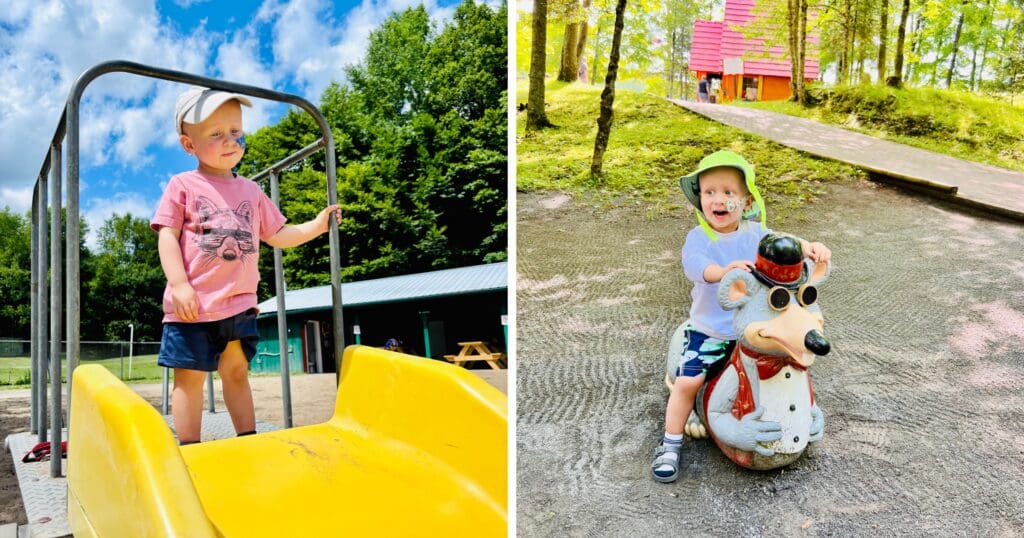
Today, we live somewhere between having survived something deeply traumatic and watching Ace thrive. He looks and feels better all the time, but underneath it all is the fear that cancer could come back and we could find ourselves in this fight again.
Despite that fear, we’ve learned to cherish every single moment and take nothing for granted.
Why Childhood Cancer Research Matters
Childhood cancer research means everything to our family because Ace has one of the “rare” cancers. Many treatments for these cancers haven’t changed much in decades, and children are still dying from cancer at unacceptable rates.
Research gives families like ours hope that treatments will continue to improve, that fewer children will experience the devastating side effects of treatment, and that more kids will survive and thrive after cancer.
What I Wish More People Knew About Childhood Cancer
I wish more people understood how completely childhood cancer changes a family. It is emotionally, socially, and financially devastating.
I also wish people could see what I see every day. Kids with cancer continue to smile, laugh, and play through the unimaginable. They are the true definition of hope and strength.
I also want people to know how grateful families like mine are for those who choose to help. When childhood cancer hasn’t affected your own family, but you decide to support childhood cancer research, it means everything to us.
My Hope for Ace
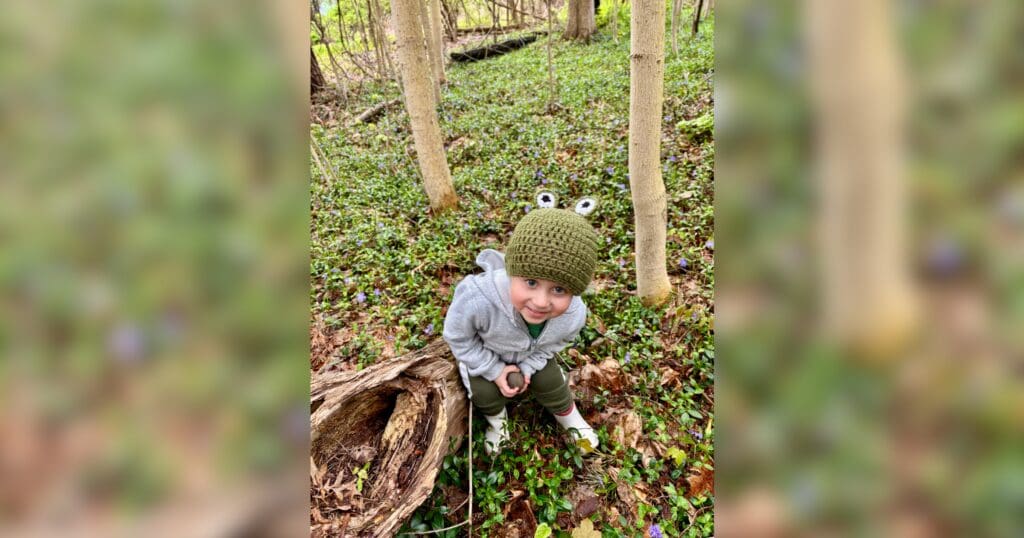
My biggest hope is simply that Ace continues to be the incredible little boy he already is. I hope he can use this painful experience to inspire and help others. Even at such a young age, I feel like he’s already done that. He’s tough as nails, skilled at “just letting things go,” and approaches life with so much joy. I know his perseverance and his heart will carry him wherever life takes him.
He is pure love and joy, and as his mama, I couldn’t be more proud.
My hope is that continued investments in childhood cancer research will give every child diagnosed with cancer the opportunity to grow up, pursue their passions, and live the full, healthy life they deserve.