My journey into pediatric cancer research began as an undergraduate student at Michigan State University, where I worked in Dr. William Henry’s lab. Early on, I discovered how exciting it was to ask scientific questions and search for answers that could one day help patients.
When I entered medical school, I gained invaluable experience treating patients and learning clinical medicine. But even while caring for patients, I found myself missing the laboratory. I missed the process of discovery and the opportunity to explore how we could create better treatments for children with cancer.
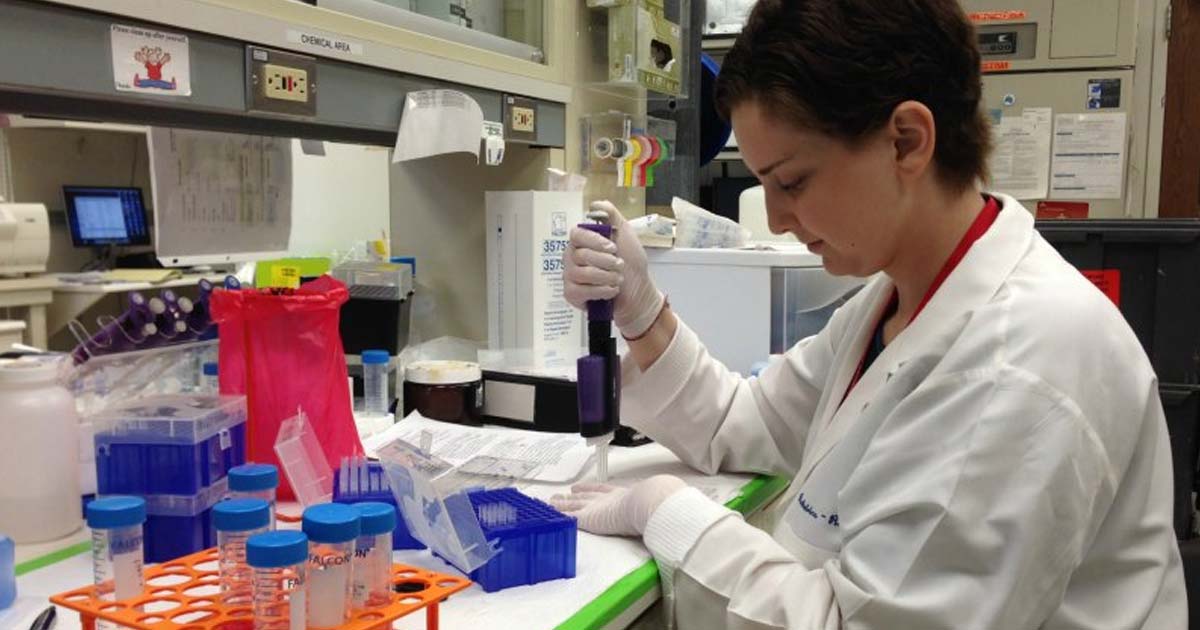
This aspiration became reality when I received a summer fellowship from the St. Baldrick’s Foundation in 2015 as a medical student at Michigan State University College of Human Medicine. Through the fellowship, I joined Dr. Giselle Saulnier Sholler’s laboratory, where I worked on testing new therapies for neuroblastoma in preclinical models. That experience reignited my passion for research and showed me how powerful the connection between science and medicine could be. I continued my work as a Howard Hughes Medical Institute Research Fellow for the following 2 years.
From that point on, I knew I wanted to pursue both clinical care and laboratory research. I continued learning medicine while returning to the lab with new ideas for developing therapies. Being a St. Baldrick’s Summer Fellow in 2015 ultimately inspired me to become a pediatric oncologist, and today I am finishing my fellowship training in pediatric oncology at Children’s Hospital of Philadelphia (CHOP).
Throughout medical school and pediatrics residency, I was fortunate to have incredible mentors, including Dr. Rani George, Dr. Patrick Grohar, Dr. Susan Cohn, and Dr. Chuan He. They taught me how to study pediatric tumor biology and understand the mechanisms that drive these cancers so we can begin identifying ways to target them.
Now, as a pediatric oncology fellow at CHOP, I’ve been able to combine my scientific interests with the clinical care of children with cancer. Every day, I am inspired by the brave children and families I meet, and that inspiration motivates me to keep working toward better outcomes for childhood cancer.
Under the mentorship of Dr. Jessica Foster and Dr. Yi Xing at CHOP, I am applying what I’ve learned to develop therapeutic strategies for children with brain tumors.
My research focuses on RNA, an important functional molecule in cancer. I am particularly interested in how RNA dysregulation drives gene expression patterns in high-grade glioma, a group of aggressive childhood brain tumors. By integrating advanced sequencing studies with experimental data, I hope to better understand the RNA patterns that drive these tumors and explore how leveraging RNA modifications could help improve responses to immunotherapies.
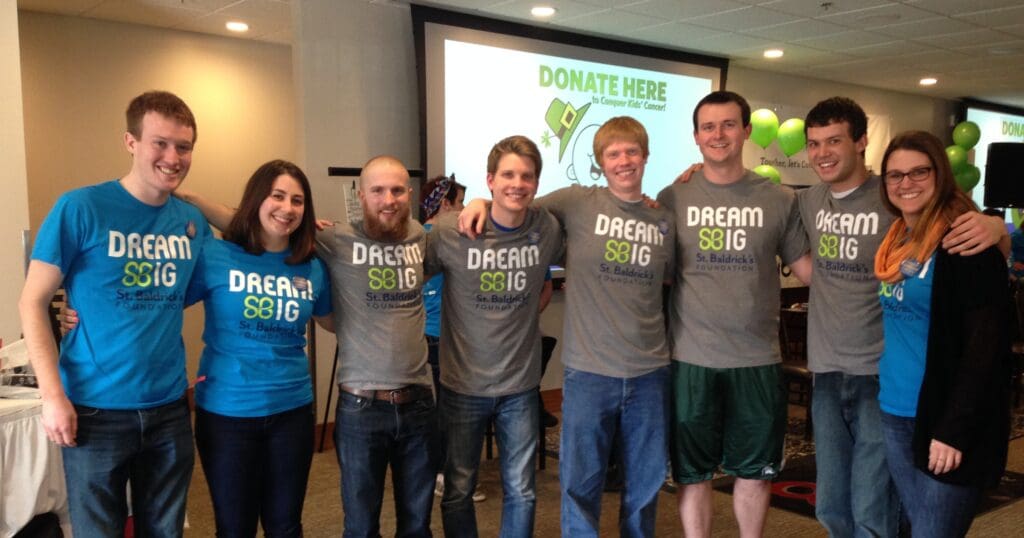
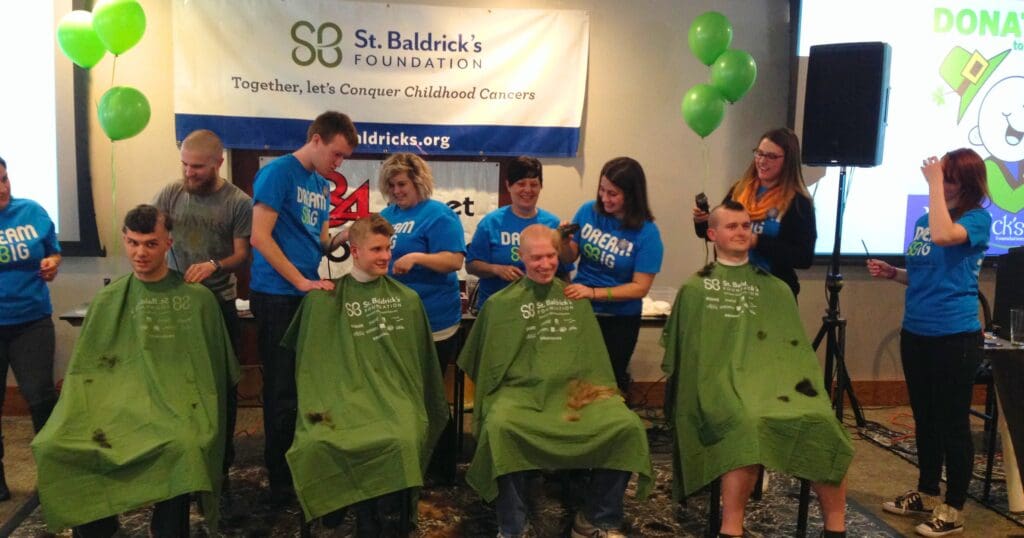
Developing new therapies for pediatric tumors requires collaboration between physicians, scientists, patients, and advocates. During medical school, I led a group of classmates in a St. Baldrick’s head-shaving event in our community. It was incredibly meaningful to come together with my peers to advocate for pediatric cancer research, and it reinforced the importance of partnering with patient advocates to continue pushing research forward.
My long-term goal is to become a physician-scientist and lead a laboratory dedicated to developing therapies that will cure childhood brain tumors. Funding from Allied World-St. Baldrick’s Fellowship allows fellows like me to spend valuable time in the lab during these foundational years of training. Having protected time for research is critical to ensuring there continues to be physician-scientists who can bridge science and medicine to improve outcomes for children with cancer.
Next, I will continue my oncology training in pediatric neuro-oncology at Seattle Children’s Hospital.
When I look back, I realize how much that St. Baldrick’s Foundation Summer Fellowship over 10 years ago shaped my path. It gave me exposure to a career as a physician-scientist and showed me how laboratory discoveries can lead to new treatments for children with cancer.
That is the work I continue striving toward every day.
Donate now and help support research into better treatments for kids with cancer.