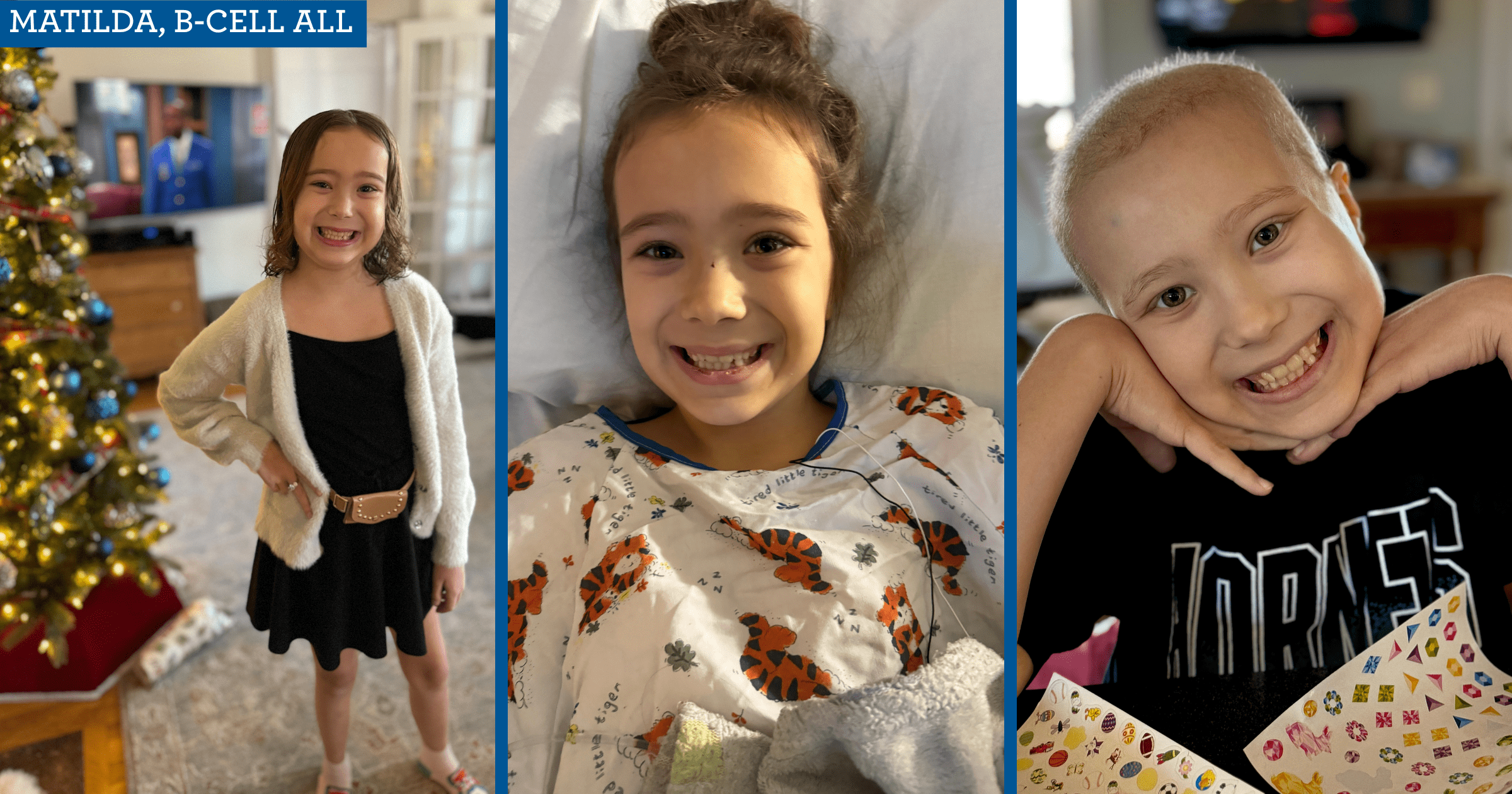
In November 2023, 9-year-old Matilda was diagnosed with B-cell acute lymphoblastic leukemia (ALL).
Her parents, Chad and Lisa, remember the whirlwind of that week. Matilda had been feverish and lethargic for days, with some general pain. Something wasn’t quite right, and bloodwork revealed something far more serious than what was originally thought to be strep throat earlier in the week.
“Our doctor told us to head straight to the ER, they thought she might have cancer,” Chad recalls. “We couldn’t fathom what we heard. It was surreal.”
The next day, their fears were confirmed: Matilda had leukemia.
From Trial to Protocol
At the time of her diagnosis, Matilda’s hospital — Upstate Golisano Children’s Hospital in Syracuse — was participating in a groundbreaking Blinatumomab (Blina) trial through the Children’s Oncology Group.
That opportunity was possible thanks in part to an annual St. Baldrick’s infrastructure grant, which helped fund the staff and resources needed to open the trial.
Matilda’s family eagerly enrolled her, but when it came time for randomization, she wasn’t selected to receive Blina.
Then, during an ER visit that summer, her doctor shared amazing news: The trial results were so strong that it had stopped early. Blina was now standard protocol. Matilda had another chance — and this time, she would receive the breakthrough treatment.
Life With the Blina Backpack
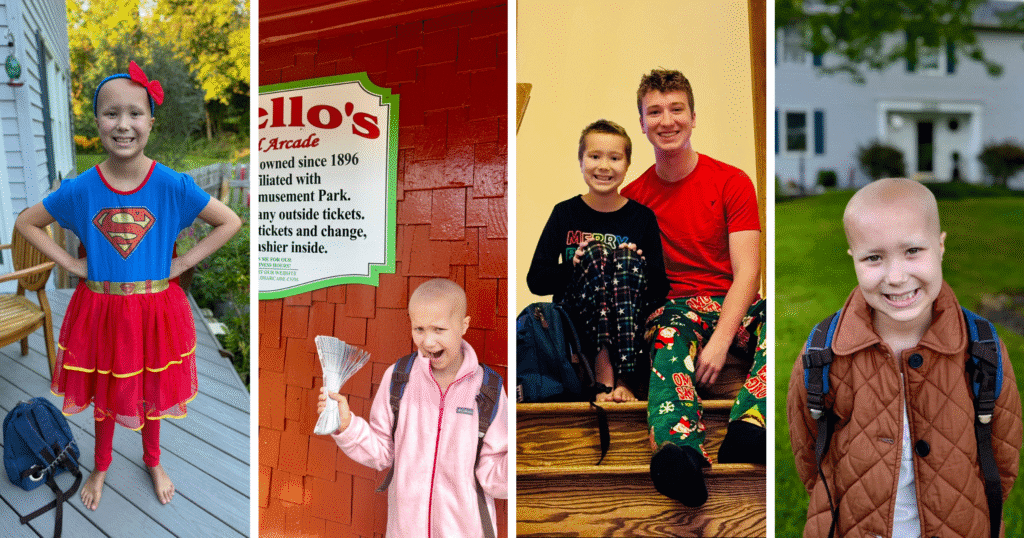
Blina treatment comes in a small backpack that delivers the drug 24/7 for 28 days at a time.
“At first, Matilda worried it might be too heavy or hard to manage,” Lisa explains. “But she adjusted quickly. The hardest part was just remembering it had to go everywhere — next to her when she slept, and even the bathroom.”
Sleeping was tricky at first, since the pump made noise and the pack had to stay close by. And juggling her school bag, lunch, saxophone, and Blina backpack wasn’t easy. Sometimes, it meant skipping the bus ride to school.
But Matilda adapted. She wore her backpack into her first week at a brand-new school. She wore it over the December holidays — even while opening Christmas presents. Through it all, she kept up with her schoolwork, friendships, and favorite activities like drawing, swimming, and riding her scooter.
“Blina gave her the chance to be a kid again while dramatically improving her odds of beating cancer,” says Chad. “We’re so incredibly grateful.”
Today, Matilda is in the maintenance phase, the final stage before her end-of-treatment date on March 1, 2026.
Why Research Matters
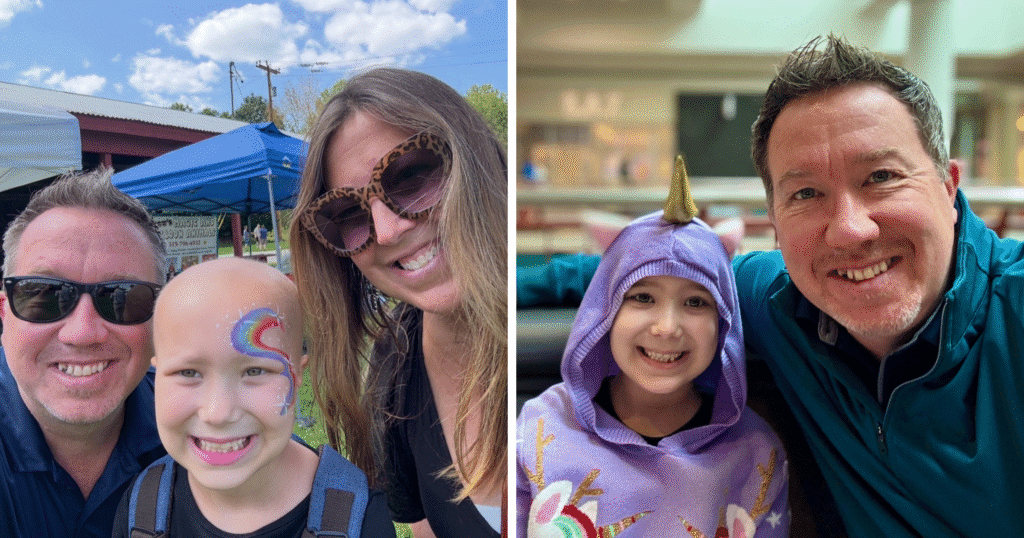
Matilda and her parents
Blina is changing life for kids everywhere with B-cell ALL. Studies showed that when added to chemotherapy, it significantly improves survival rates and reduces side effects. What was once a clinical trial is now part of standard treatment.
For the Loomis family, that progress feels personal.
“To know Matilda has a better chance now — not just to survive, but to thrive — we are so thankful,” says Chad.
And it wouldn’t have been possible without research and the community support behind it. Infrastructure grants, like the one from St. Baldrick’s, made sure hospitals like Upstate could participate in the trial, opening doors for kids like Matilda.
Take On the Backpack Challenge

Inspired by breakthroughs like Blina, St. Baldrick’s has launched a new fundraising initiative: the Send Kids’ Cancer Packing Backpack Challenge.
Participants wear a symbolic backpack for 28 days or 28 miles, honoring kids like Matilda, and raising money for the next lifesaving treatment.
Because we won’t stop at increased survival. We won’t stop until every child survives.