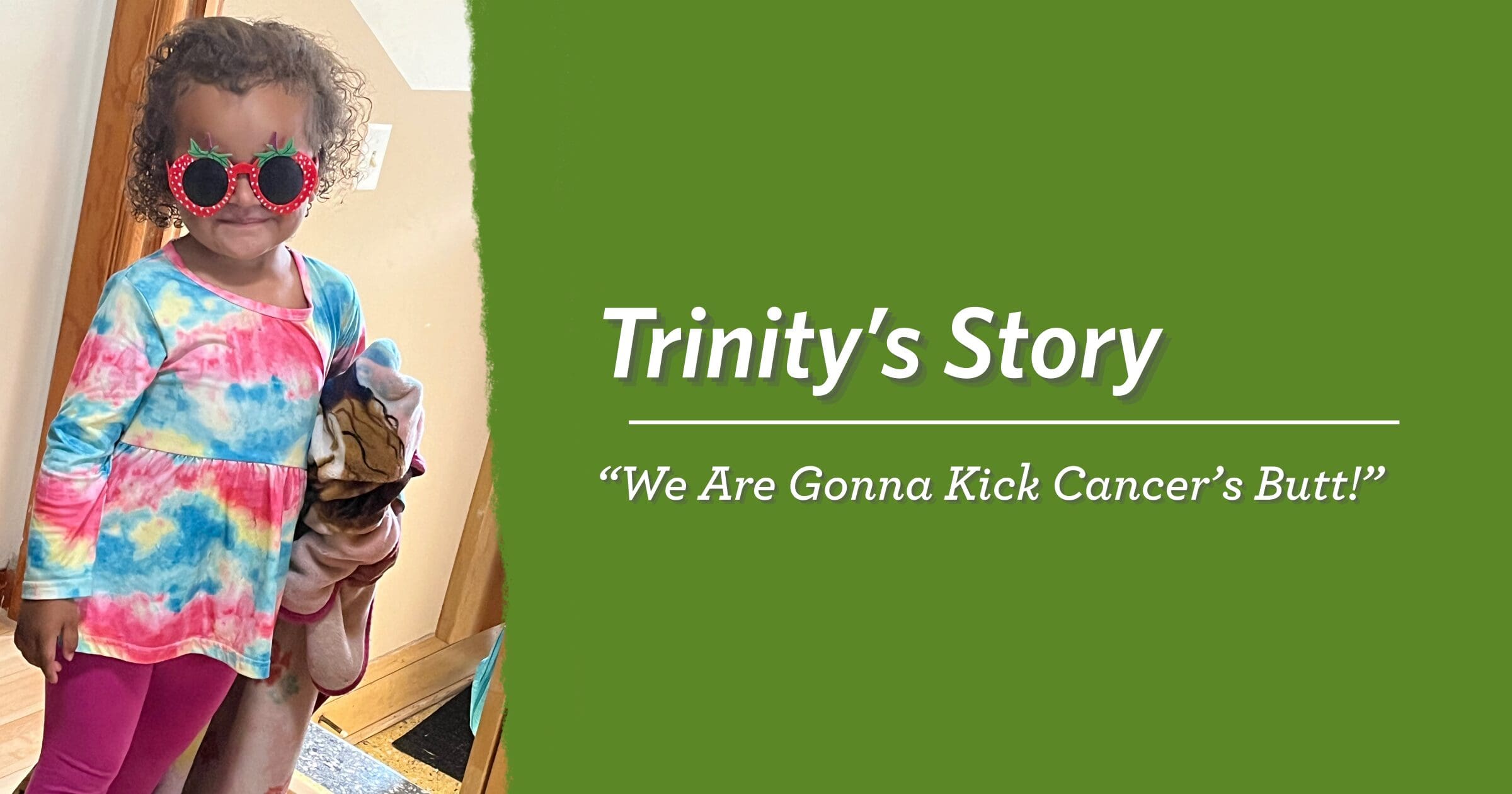
Before her diagnosis, Trinity was a vibrant, independent five-year-old with a zest for life that is rare to see. She loved playing soccer, cooking in the kitchen with her mom, exploring the outdoors, and making the most of every single day. When asked what she wants to be when she grows up, Trinity always has the same answer: a professional soccer player.
Everyone who meets Trinity says the same thing—she is one of the kindest, most loving, and empathetic children they’ve ever met.
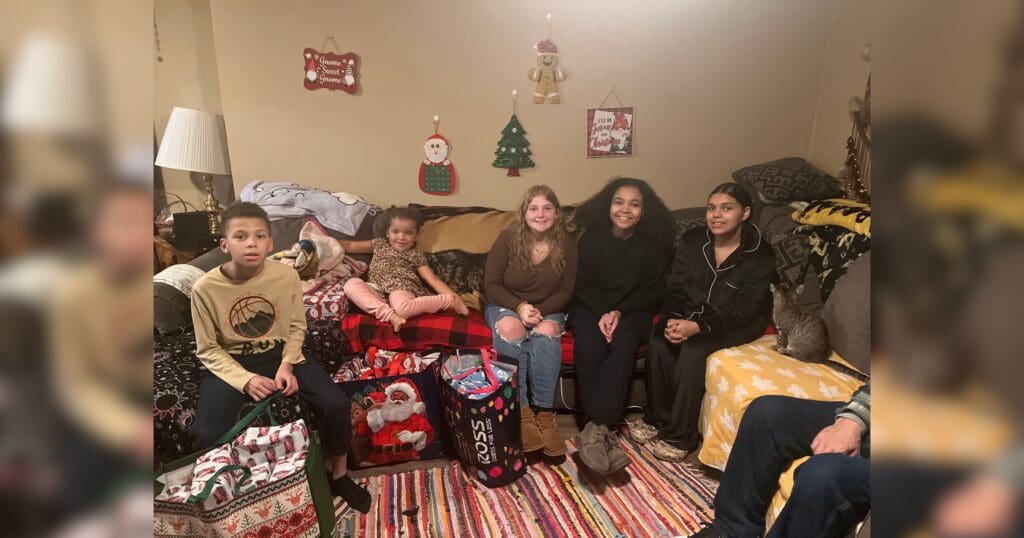
About a year before her diagnosis, Trinity began experiencing symptoms that raised some concern, especially frequent nosebleeds. Her mom, Amanda, brought her to the doctor several times, but they were reassured the cause was likely behavioral or environmental. The family made small adjustments at home, like reducing dryness in the air and changing bedtime routines.
Then, in June 2025, Trinity began complaining of leg pain. There was no obvious injury, but Amanda trusted her instincts and took her to urgent care. X-rays didn’t show anything concerning, and orthopedics also couldn’t find an answer after additional imaging. The next step was an MRI.
Just days later, on June 16, Trinity’s pain became unbearable. She couldn’t walk.
Amanda rushed her to the emergency room, where doctors performed the MRI. After returning to the room, they had barely been there five minutes when the ER doctor walked in and pulled up a chair.
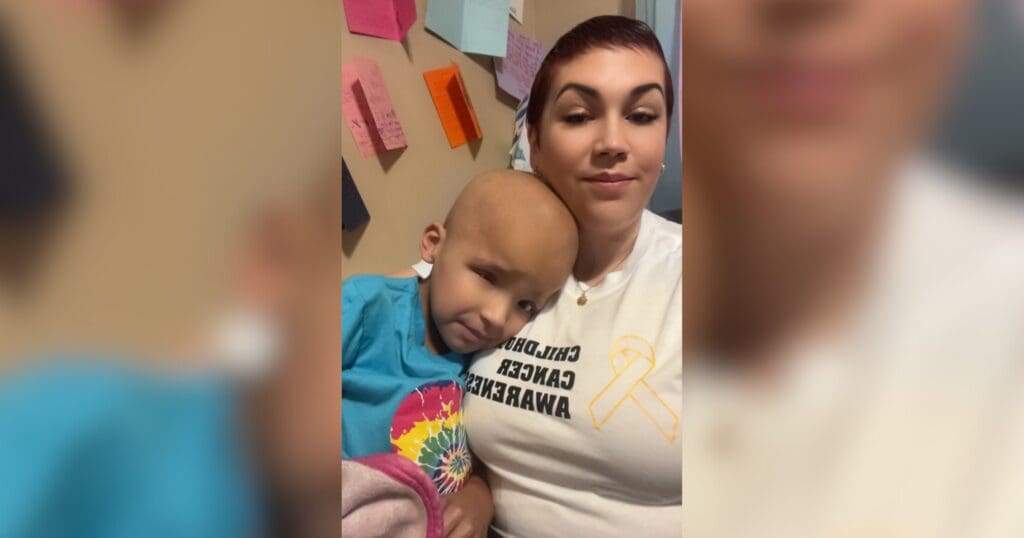
“In that moment,” Amanda remembers, “my world got very small.”
The doctor gently prepared her for what was coming next.
“I just want to prepare you because Oncology is coming down to speak with you because they found a mass on the MRI.”
Three days later, Trinity received her diagnosis: stage 3 intermediate-risk rhabdomyosarcoma of the pelvis, with a tumor that could not be surgically removed.
Treatment began immediately—and aggressively.
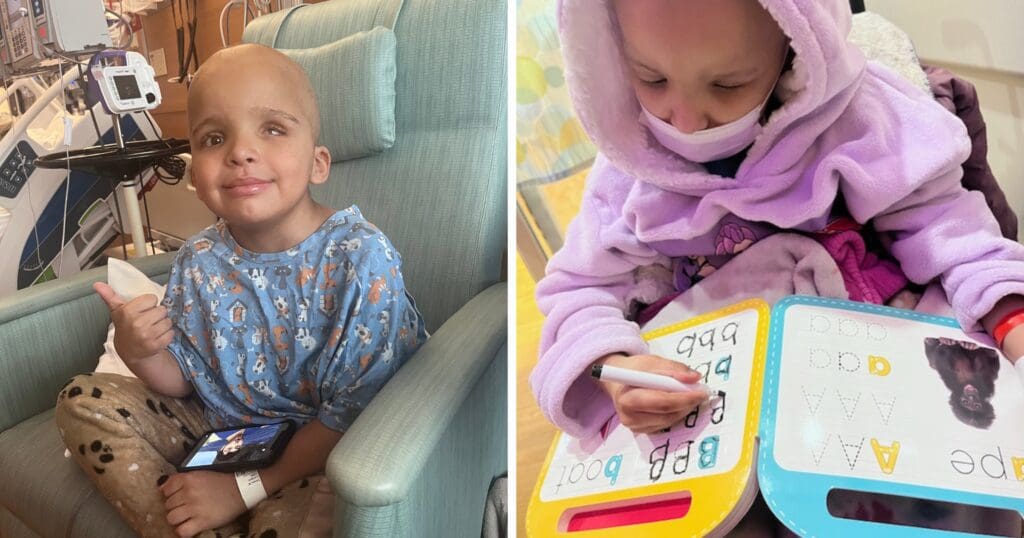
Trinity’s pain was severe, and at one point her IV pole held multiple pumps just to keep up with the medications she needed. An emergency PICC line was placed so doctors could start chemotherapy right away. Because the tumor was blocking her right kidney, she also needed a nephrostomy tube.
The changes came quickly. Trinity lost her hair and struggled to eat, which led to an NG feeding tube. Between the medications, pain, and overwhelming hospital environment, Amanda says there were moments when her sweet little girl seemed like someone she didn’t recognize.
Her first chemotherapy treatments were intense, and her body struggled to respond. Trinity developed febrile neutropenia, required oxygen support, and needed a blood transfusion. Feeding was also difficult—she vomited three NG tubes before doctors switched to an NJ tube.
After 24 days in the hospital, Trinity was finally able to go home.
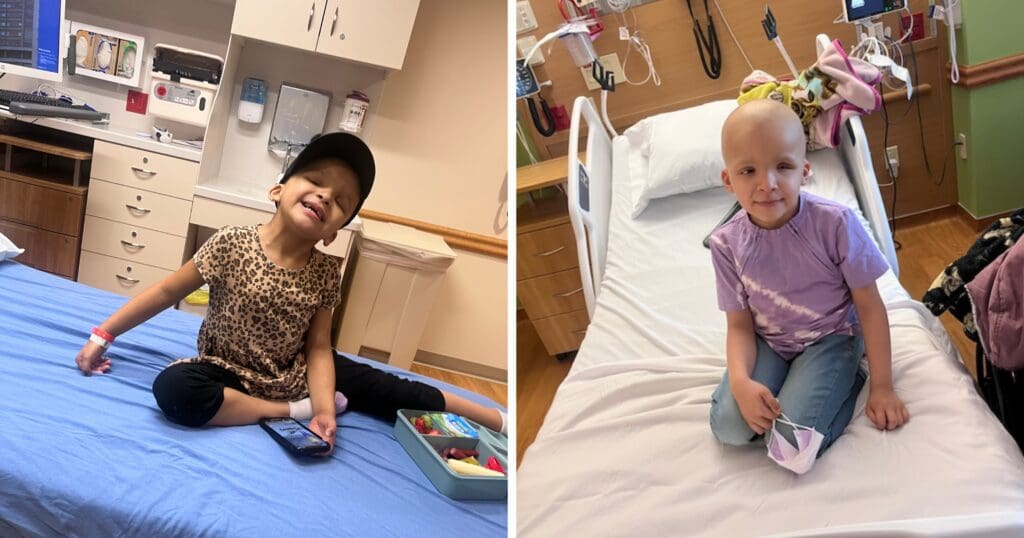
They nearly made it a month before returning to the hospital with two serious infections. During that stay, Trinity had a severe reaction to an IV antibiotic that caused her kidneys to temporarily shut down. Because her body couldn’t metabolize her pain medication, doctors had to administer Narcan to reverse the effects.
But there was also encouraging news.
Imaging showed Trinity’s tumor had already shrunk enough that it was no longer blocking her right kidney. After a successful clamp trial, doctors were able to remove the nephrostomy tube.
Trinity also managed to throw up her third NJ tube, and since she had begun eating more by mouth, doctors decided to give oral feeding another try.
Soon after, she was able to go home again.
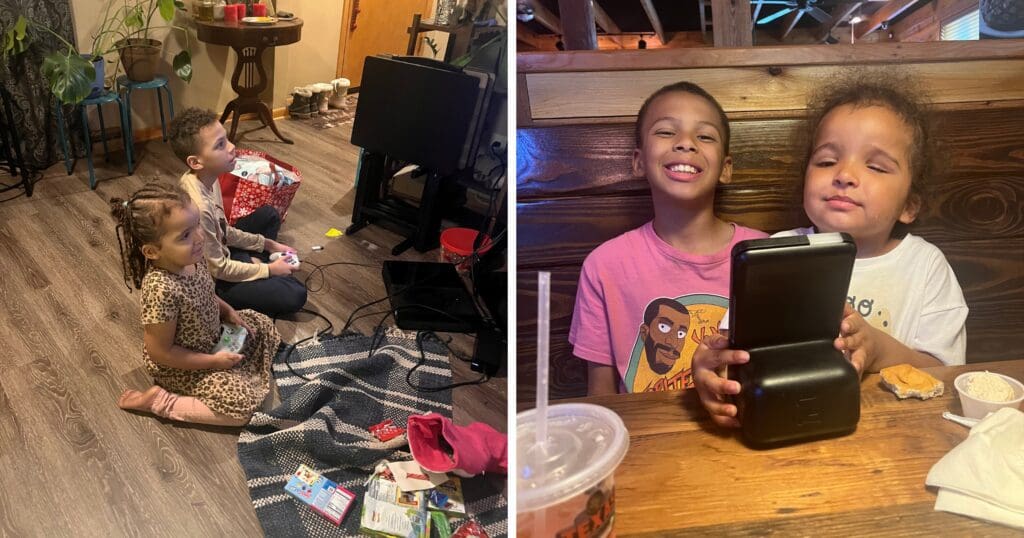
Another hospitalization followed when chemotherapy side effects caused respiratory distress and significant weight loss—nearly 20 pounds in just two months. Amanda advocated strongly for her daughter, believing something more was going on since Trinity was still eating.
Further testing suggested malabsorption, and doctors started total parenteral nutrition (TPN). The results were dramatic. Trinity began gaining weight and was eventually able to go home tube-free.
Meanwhile, her tumor continued responding to treatment. In just eight weeks, it shrank from 6.6 x 7.7 cm to 2.9 x 2.5 cm.
As the months went on, Trinity kept pushing through treatment with remarkable resilience. By November 2025, she had completed 28 rounds of radiation therapy. After a brief three-week pause to allow her bone marrow to recover, she was able to restart chemotherapy—and during that break, she regained the weight she had lost, helping her return to treatment from a stronger place.
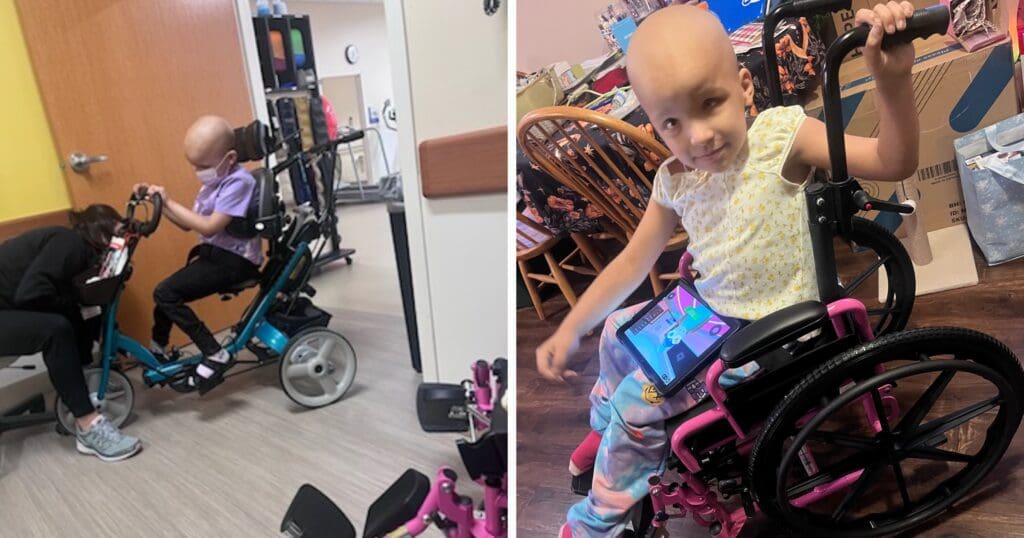
Through it all, Trinity has worked hard to adapt. She still loves to sing and dance, and on her good days, she moves around with the help of her wheelchair.
Now, in March 2026, Trinity is nearing a major milestone: just seven infusions remain before she finishes frontline treatment, which doctors expect to wrap up in April.
She’s also making progress in physical therapy and can now ride the therapy bike around the first floor of the hospital. Trinity has learned to navigate her wheelchair like a pro—and her family has even brought back one of their favorite traditions: kitchen dance parties.
She recently visited a museum for the first time that she can remember, and is already excited about exploring more this summer.
Trinity still dreams of becoming a professional soccer player someday—though sometimes she says she might want to be a “cancer nurse.”
Through every challenge, Trinity’s joy and kindness continue to shine.
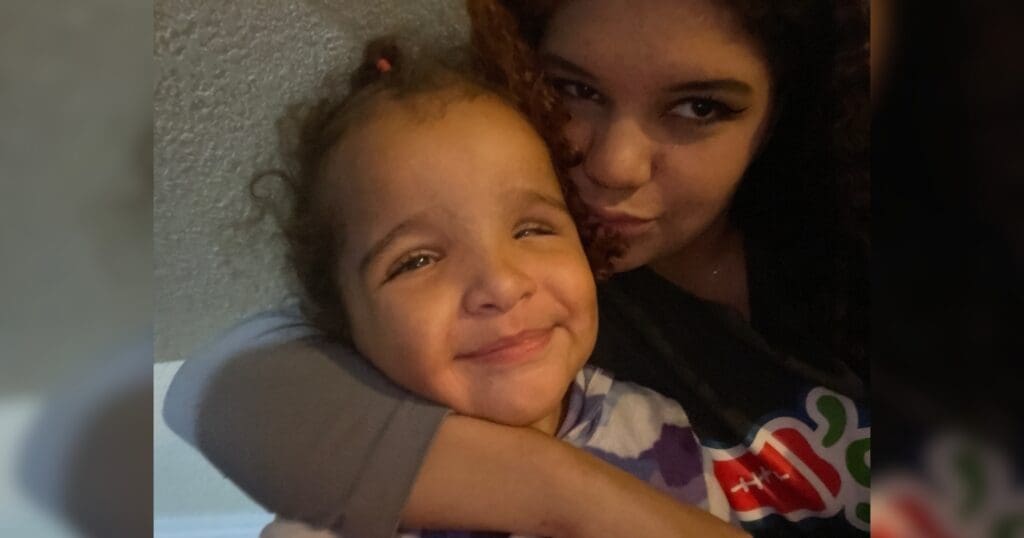
As Amanda says, “She has been able to maintain her joy and kindness and is still my everyday hero.”
And Trinity’s own words remain her battle cry:
“WE ARE GONNA KICK CANCER’S BUTT!”